CBD Topical vs Oral: What’s the Difference?

If you are exploring hemp wellness products, you may have come across CBD oils, CBG oils, creams, balms, roll ons, sprays and other cannabinoid products.
But one important question often gets overlooked:
Should you use a hemp product on your skin or take it orally?
The answer depends largely on what you are looking for, the product formulation, the cannabinoid used and how you want to incorporate it into your routine.
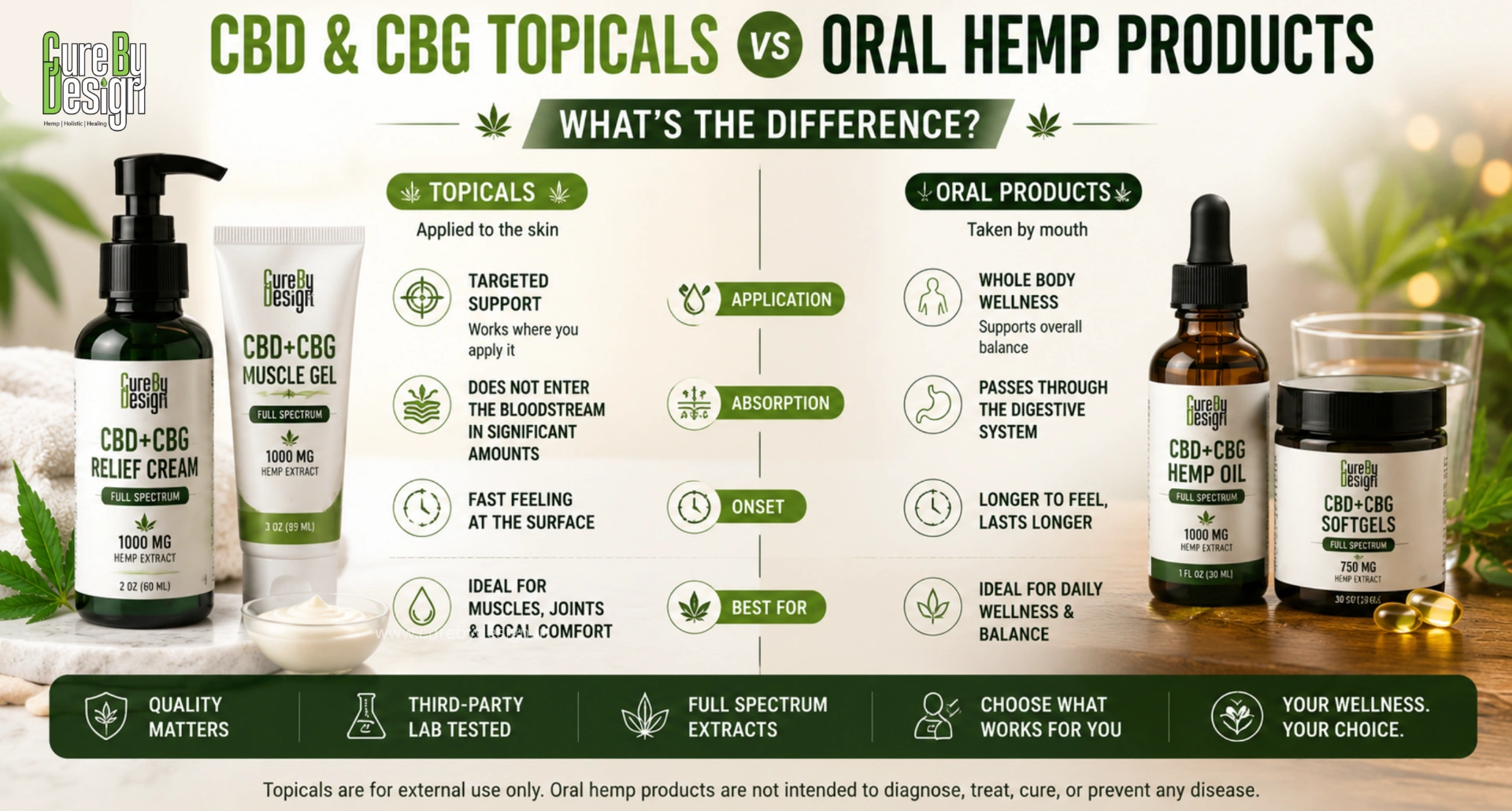
A CBD topical is formulated for application to the skin, while an oral hemp product is designed to be consumed and interact with the body through the digestive or oral route.
Neither format is automatically “better.” They are different delivery formats designed for different types of use.
In this guide, we will explain the difference between CBD topical vs oral products, how CBG topicals fit into the picture, what to know about hemp topical products and what to consider when choosing between a topical and an oral hemp product.
Quick answer: Choose a topical when your interest is primarily in applying a product to the skin. Consider an oral product when you want a cannabinoid product designed for oral consumption and broader systemic exposure. Always follow the product’s intended use and dosage instructions.
What Is a CBD Topical?
A CBD topical is a product containing cannabidiol, commonly known as CBD, that is formulated for application to the skin.
Examples include:
- CBD creams
- CBD balms
- CBD lotions
- CBD roll ons
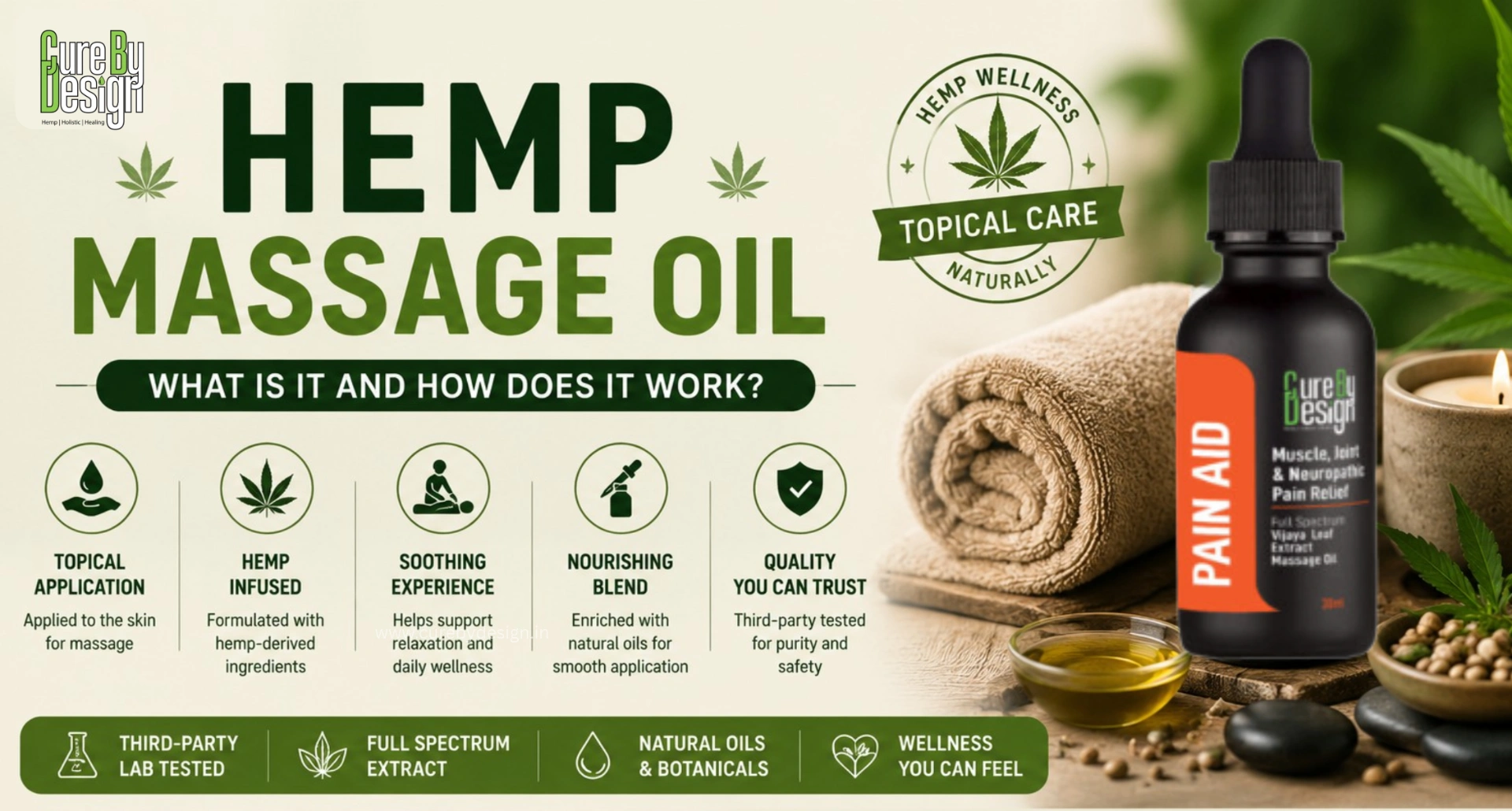
- CBD massage oils
- CBD gels
- CBD skincare products
Unlike an oral CBD product, a topical is not designed to be swallowed.
Topical cannabinoid formulations are an active area of scientific research. Studies have examined how cannabinoids interact with the skin and the potential role of topical and transdermal formulations. However, researchers also emphasize that formulation, absorption, safety and effectiveness can vary between products.
This is important because simply seeing “CBD” on a label does not tell you how the product will behave when applied to the skin.
The formulation matters.
What Is an Oral Hemp Product?
An oral hemp product is formulated to be consumed through the mouth.
Common examples include:
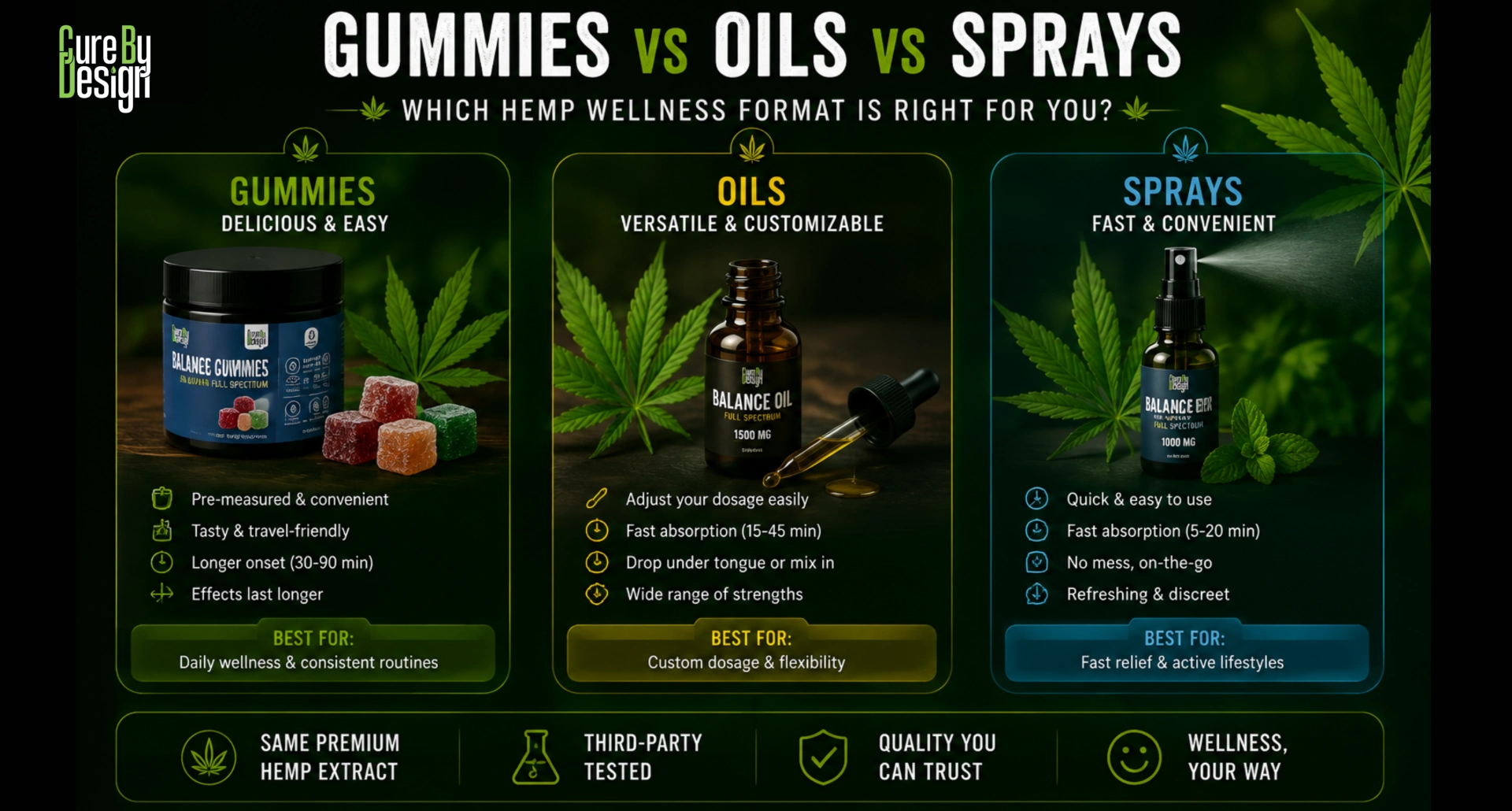
- Hemp oils
- CBD oils
- CBG oils
- Hemp gummies
- Cannabinoid capsules
- Oral sprays
- Other cannabinoid products designed for oral use
When cannabinoids are consumed orally, they pass through the digestive system and are absorbed into the body.
The pharmacokinetics of oral CBD can be influenced by factors such as dosage, formulation, food intake and individual differences. Research shows that the route of administration can significantly influence cannabinoid exposure and pharmacokinetics.
That means an oral product should not be considered equivalent to applying the same amount of CBD or CBG to the skin.
CBD Topical vs Oral: The Main Difference
The simplest way to understand the difference is to look at where the product is intended to work and how it is administered.
| Feature | CBD or CBG Topical | Oral Hemp Product |
|---|---|---|
| Application | Applied to skin | Consumed orally |
| Common formats | Creams, balms, roll ons, massage oils | Oils, gummies, capsules, oral sprays |
| Primary route | Cutaneous | Oral |
| Intended use | Skin application | Oral consumption |
| Systemic exposure | Depends on formulation | Designed for systemic exposure |
| Dosing | Depends on product formulation | Usually stated per serving |
| Absorption | Depends on skin and formulation | Influenced by digestion and metabolism |
| Best approach | Follow topical directions | Follow oral serving instructions |
This distinction is one of the most important things to understand when comparing CBD oil vs topical products.
How Do CBD Topicals Work?
When a CBD topical is applied to the skin, the cannabinoid comes into contact with the skin’s complex biological environment.
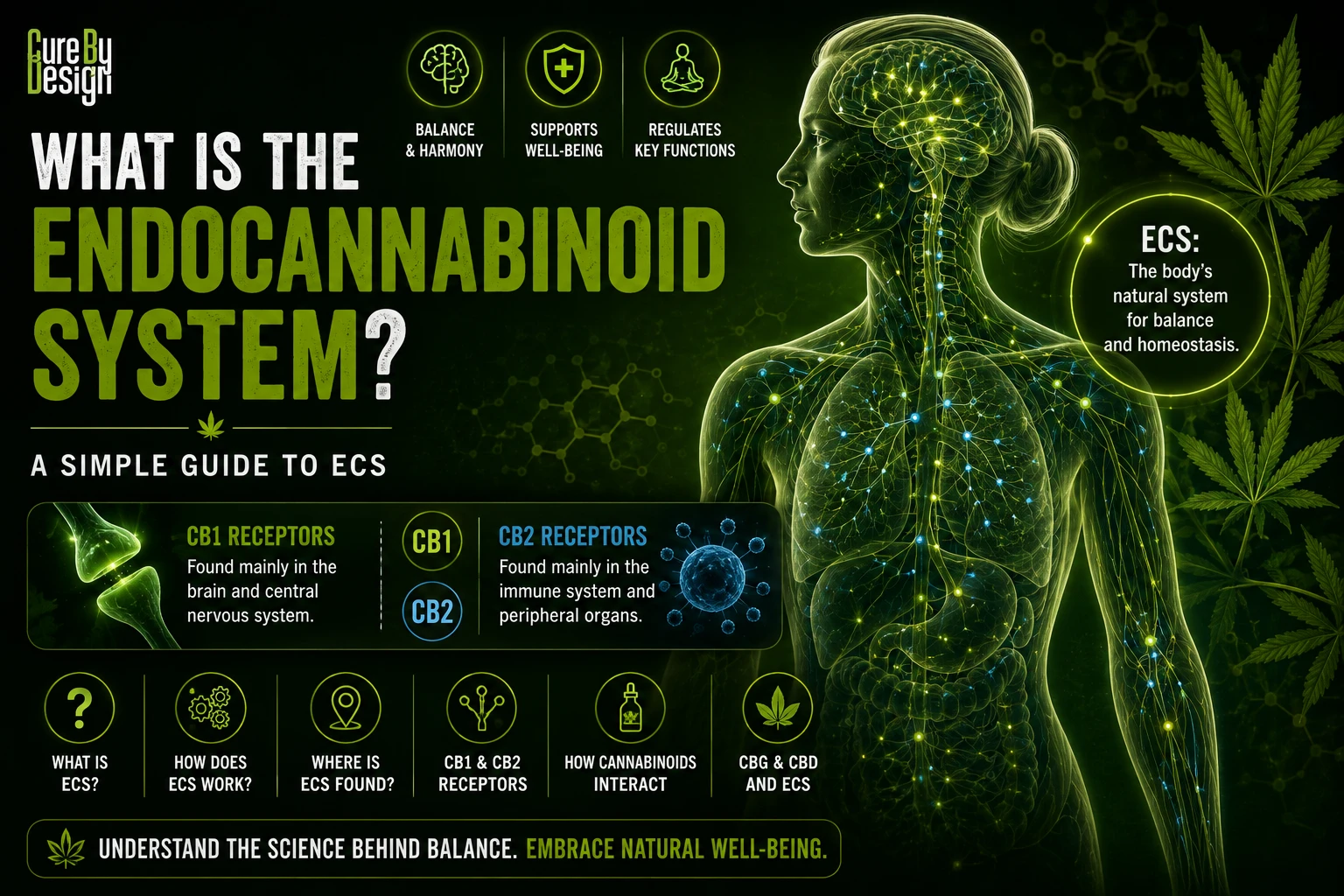
The skin contains components of the endocannabinoid system, including cannabinoid receptors and related signalling pathways.
Research has investigated the interaction between cannabinoids and skin biology, including the potential role of CBD in topical formulations. However, clinical evidence remains limited for many proposed applications, and more research is needed to understand how different formulations behave in real world use.
Another important point is that topical does not automatically mean transdermal.
Topical
A topical product is primarily formulated for application to the skin.
Transdermal
A transdermal formulation is specifically designed to deliver an active compound across the skin and potentially into systemic circulation.
These terms should not be treated as interchangeable.
What Are CBG Topicals?
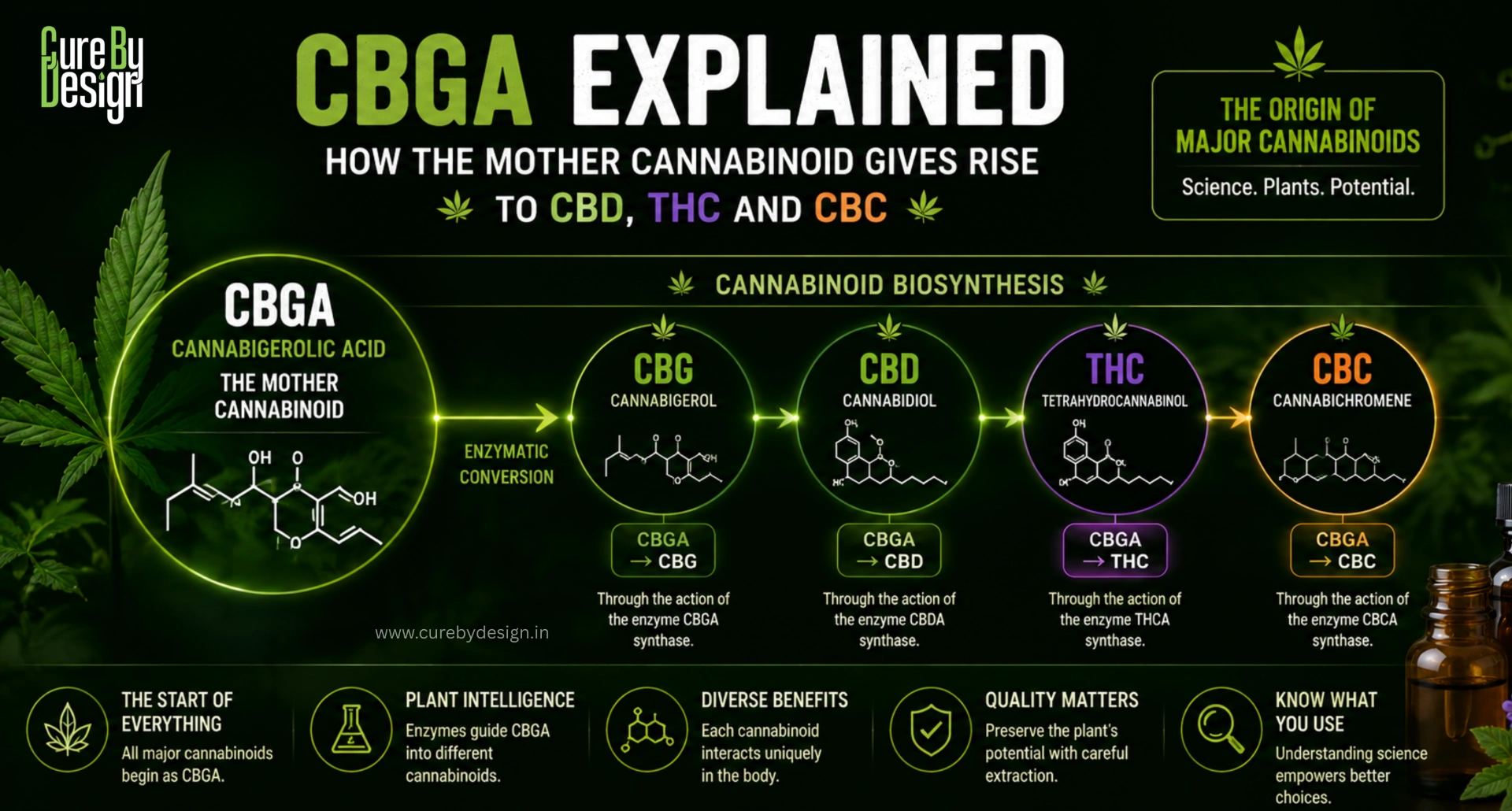
CBG, or cannabigerol, is another phytocannabinoid found in Cannabis sativa.
A CBG topical is a skin applied formulation containing CBG.
CBG has attracted increasing scientific interest, including research into its interaction with skin related biological pathways and its potential use in cosmetic formulations.
However, the evidence base for CBG topicals is still developing.
A recent study investigating CBD and CBG in topical applications found promising results for their potential as cosmetic ingredients, but this type of laboratory evidence should not be interpreted as proof that a topical product treats a medical condition.
For consumers, the important takeaway is simple:
CBG topical products are an emerging area of cannabinoid research, not a replacement for medically proven treatments.
CBD Topical vs Oral: Which One Should You Choose?
There is no universal answer.
Instead, start by asking:
What type of product are you actually looking for?
Choose a topical format if:
You prefer applying a product directly to the skin.
Topical products can be convenient for people who already use creams, balms, lotions or massage oils as part of their personal wellness or skincare routine.
You should always use the product according to its label instructions and intended purpose.
Consider an oral format if:
You are specifically looking for a cannabinoid product designed for oral consumption.
Oral products may include oils, gummies, capsules and oral sprays.
These products are designed around oral administration, so the serving size and directions on the product label are particularly important.
CBD Oil vs Topical: Are They the Same?
Not necessarily.
The word “oil” can create confusion.
A CBD oil may be formulated for:
- Oral consumption
- Topical application
- Massage
- Cosmetic use
The intended route should always be clearly stated on the product label.
An oil designed for oral consumption should not automatically be used on the skin, and a topical oil should not automatically be consumed.
Always check the product instructions before using it.
This is particularly important because formulations can contain different carrier oils, concentrations, fragrances and other ingredients.
CBD Topical vs Oral: Absorption Differences
One of the biggest differences between topical and oral products is how cannabinoids interact with the body.
Topical application
With a topical product, cannabinoids are applied to the skin.
How much of a cannabinoid passes through the skin can depend on:
- Formulation
- Cannabinoid concentration
- Skin condition
- Ingredients
- Molecular properties
- Application area
- Duration of contact
Researchers have highlighted that topical cannabinoid absorption can vary considerably between formulations and that product specific evaluation is important.
Oral consumption
With oral products, cannabinoids are processed through the digestive system and liver before entering systemic circulation.
For CBD specifically, research indicates that factors such as dosage, food intake and formulation can affect pharmacokinetics.
This is why comparing products simply by the number of milligrams on the label can be misleading.
The same number of milligrams does not necessarily mean the same exposure or effect when the administration route is different.
How Long Does a CBD Topical Take to Work?
There is no single scientifically established timeframe that applies to every CBD topical.
The experience can vary according to:
- Product formulation
- Cannabinoid concentration
- Skin characteristics
- Application area
- Other ingredients
- Individual factors
Research into topical CBD has also identified limitations in the existing clinical evidence, including small numbers of human studies and differences between formulations.
Therefore, it is better to avoid promising a specific onset time.
Instead, follow the product’s directions and evaluate how your skin responds.
How Long Does Oral CBD Take to Work?
Oral cannabinoids also do not have one universal onset time.
Factors such as:
- Formulation
- Serving size
- Food intake
- Individual metabolism
- Route of administration
can influence pharmacokinetics.
Research examining CBD pharmacokinetics has found that route, dose and food status can influence CBD exposure.
This means consumers should avoid assuming that every CBD oil, gummy or capsule will produce the same experience.
What About Hemp Topical Products?
Hemp topical products are products derived from or containing hemp based ingredients and designed for application to the skin.
They can include:
- Hemp massage oils
- Hemp creams
- Hemp balms
- Hemp lotions
- CBD topicals
- CBG topicals
- Hemp skincare products
However, “hemp” is a broad term.
A hemp topical may contain hemp seed oil, cannabinoids, hemp extract or a combination of ingredients.
Hemp seed oil is different from CBD oil.
Hemp seed oil is primarily obtained from hemp seeds and is valued for its fatty acid profile and cosmetic properties.
CBD oil contains cannabidiol.
Therefore, hemp seed oil and CBD oil should not be treated as the same ingredient.
CBD Topical vs CBG Topical
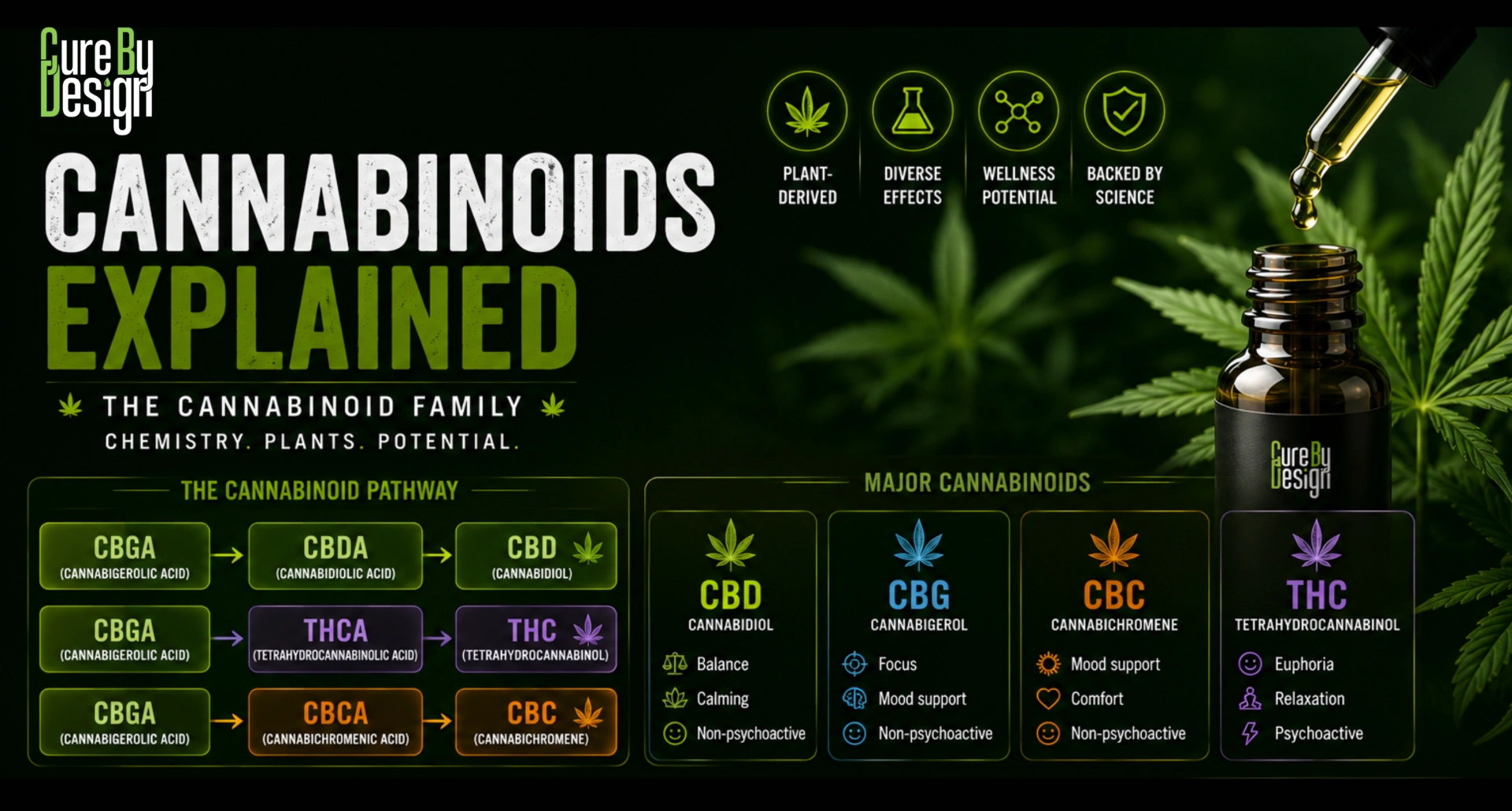
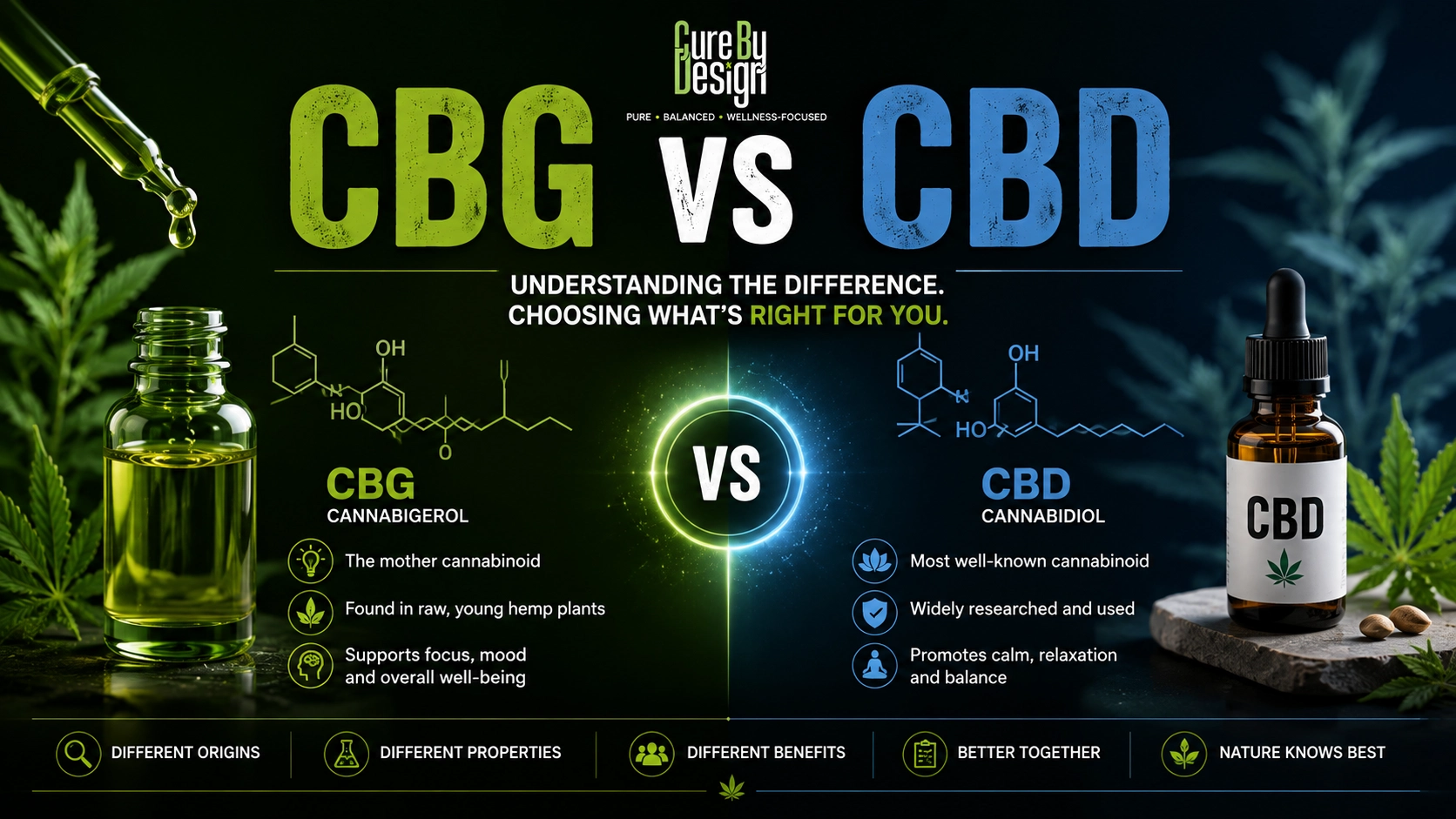
CBD and CBG are both phytocannabinoids, but they are chemically distinct compounds.
| Feature | CBD | CBG |
|---|---|---|
| Full name | Cannabidiol | Cannabigerol |
| Category | Phytocannabinoid | Phytocannabinoid |
| Psychoactive like THC | No | No |
| Topical research | Growing | Emerging |
| Common formats | Oils, creams, balms, gummies | Oils, topicals and other cannabinoid formats |
| Evidence | More extensively studied than CBG | Smaller and developing evidence base |
CBD currently has a larger research literature than CBG, particularly in relation to skin applications.
CBG is an emerging cannabinoid that researchers continue to investigate.
So if you are comparing a CBG topical vs CBD topical, do not assume that one is automatically better.
Instead, consider the formulation, ingredients, cannabinoid concentration, intended use and quality testing.
Are Topicals Better Than Oral Hemp Products?
Not necessarily.
Topical and oral products serve different purposes.
A topical product is designed for application to the skin.
An oral product is designed for consumption.
Therefore, the better question is:
Which format fits the way you want to use a hemp wellness product?
For example:
Interested in a skin applied product?
A topical may be the more appropriate format.
Prefer a product designed for oral consumption?
An oral oil, gummy or capsule may be more suitable.
The decision should be based on the product’s intended use rather than assuming that one delivery method is universally superior.
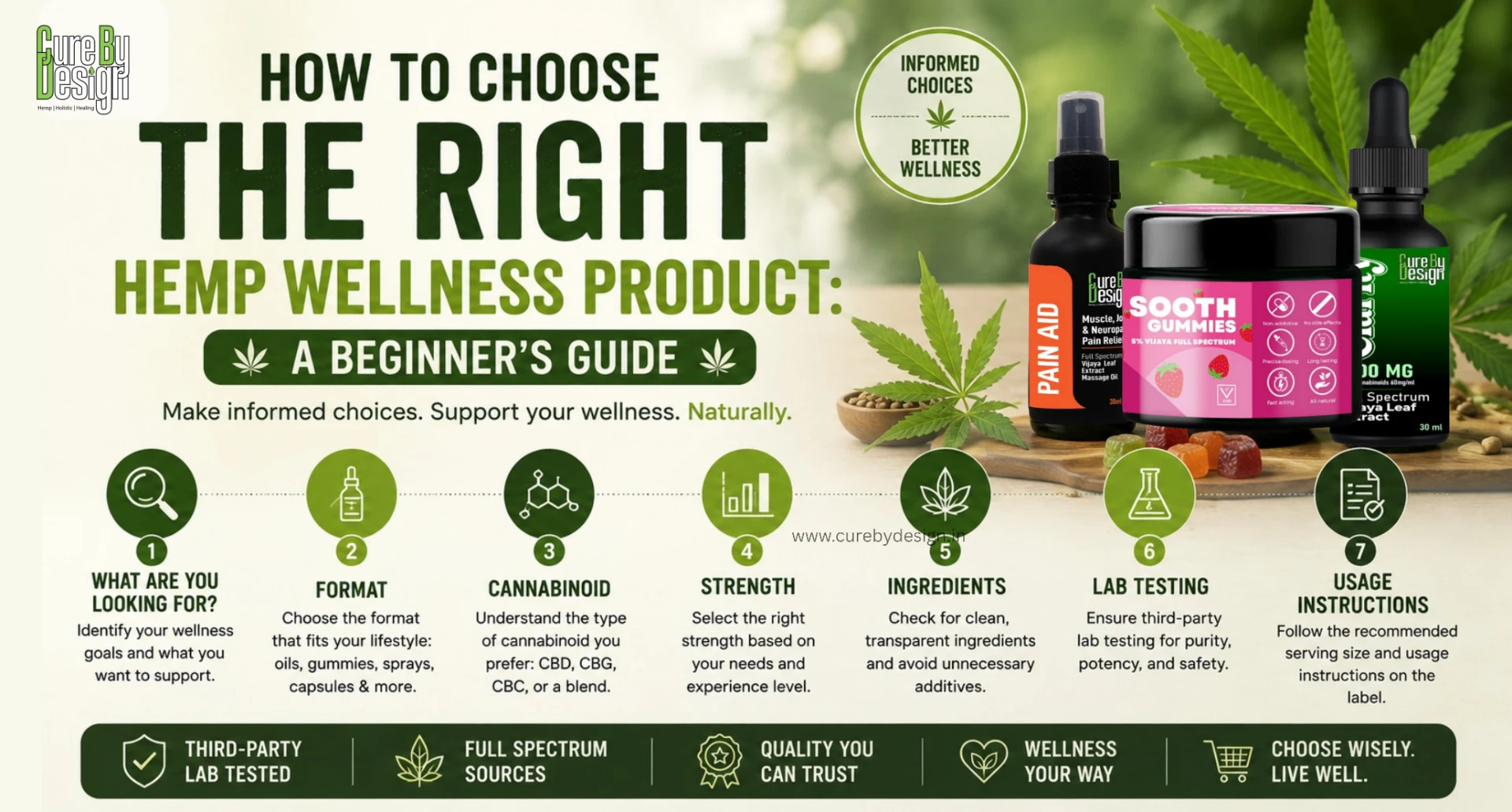
What Should You Check Before Buying a Hemp Product?
Whether you are choosing a CBD topical, CBG topical or oral hemp product, product quality matters.
1. Check the cannabinoid
Look for clear information about whether the product contains:
- CBD
- CBG
- Other cannabinoids
- Hemp seed ingredients
- A combination of cannabinoids
Do not rely solely on the word “hemp.”
2. Check the concentration
Look for clearly stated cannabinoid concentration.
For oral products, check the amount per serving.
For topical products, check the concentration stated by the manufacturer.
3. Check the ingredients
Review the complete ingredient list.
For topical products, this can include carrier oils, botanical ingredients, fragrances and other cosmetic ingredients.
For oral products, check sweeteners, flavouring agents, carrier oils and other ingredients.
4. Look for laboratory testing
A quality cannabinoid product should ideally have appropriate laboratory testing information.
A Certificate of Analysis, commonly called a COA, can provide information about cannabinoid content and testing for certain contaminants depending on the laboratory and testing panel.
5. Check the intended route
This is particularly important.
Look for wording such as:
For topical use only
or
For oral use
Do not assume that products containing the same cannabinoid can be used interchangeably.
6. Follow the label
Use the product according to the manufacturer’s directions.
Avoid increasing the amount simply because you do not immediately notice a result.
Can You Use CBD Topicals and Oral Products Together?
It depends on the products and your individual circumstances.
Using two products containing cannabinoids can increase your overall exposure.
If you take prescription medicines or have an underlying health condition, speak with a qualified healthcare professional before using cannabinoid products.
This is especially important because CBD can interact with certain medications, and unapproved cannabinoid products have not necessarily been evaluated for appropriate dosing, interactions or safety.
Are CBD and CBG Topicals Safe?
Safety depends on the formulation, ingredients, concentration and individual response.
Research into topical cannabinoids has identified potential but also significant gaps in the evidence. Researchers have emphasized the need for better standardized formulations and product specific safety evaluation.
Before applying a new topical product:
- Read the ingredient list
- Follow the label
- Avoid broken or irritated skin unless the product specifically states otherwise
- Stop use if significant irritation occurs
- Consider a small area test if appropriate for the product
- Seek professional advice if you have concerns
A cannabinoid topical should not be presented as a proven treatment for a medical condition unless the specific product and claim have appropriate evidence and regulatory authorization.
CBD Topical vs Oral: Simple Decision Guide
Use this simple framework:
What are you looking for?
↓
Skin application
Choose a product specifically formulated for topical use.
↓
Oral cannabinoid consumption
Choose an oral product specifically labelled for consumption.
↓
CBD or CBG?
Compare the cannabinoid, concentration and available evidence.
↓
What is in the product?
Check the complete ingredient list.
↓
Is it tested?
Look for appropriate laboratory testing and transparent product information.
↓
How should you use it?
Follow the manufacturer’s instructions.
This approach is more useful than simply asking whether CBD topicals or oral hemp products are “better.”
CBD Topical vs Oral: Key Takeaways
The difference between a CBD topical vs oral product mainly comes down to the route of administration and the product’s intended use.
CBD and CBG topicals are formulated for application to the skin, while oral hemp products are designed to be consumed.
Topical cannabinoid research is growing, but evidence varies significantly between formulations and many proposed benefits still require stronger human clinical evidence.
When choosing between CBD oil vs topical, don’t rely on the word “oil” alone. Check whether the product is intended for oral or topical use.
Most importantly, consider:
Format → Cannabinoid → Concentration → Ingredients → Testing → Intended use
That gives you a much better foundation for choosing a hemp wellness product.
Frequently Asked Questions
What is the difference between CBD topical and oral CBD?
A CBD topical is formulated for application to the skin, while oral CBD is formulated for consumption. They use different administration routes and can have different absorption and pharmacokinetic characteristics.
Is CBD topical better than oral CBD?
Neither is universally better. A topical is designed for skin application, while oral CBD is designed for consumption. The appropriate format depends on your intended use and the product’s formulation.
What is a CBG topical?
A CBG topical is a skin applied product containing cannabigerol, or CBG. CBG topical applications are an emerging area of research, and more human research is needed to establish their potential uses.
Can CBD oil be used topically?
Only if the product is specifically formulated and labelled for topical use. A CBD oil intended for oral consumption should not automatically be applied to the skin.
What is the difference between CBD oil and a CBD topical?
CBD oil can refer to several formulations, so the intended route is important. A CBD topical is specifically formulated for application to the skin, while an oral CBD oil is designed for consumption.
Do CBD topicals enter the bloodstream?
The extent to which cannabinoids applied to the skin enter systemic circulation depends on the formulation and whether the product is designed for topical or transdermal delivery. These routes should not be treated as identical.
How long does a CBD topical take to work?
There is no universal timeframe. Onset can vary depending on formulation, cannabinoid concentration, application area and individual factors. Research into topical CBD remains limited and formulation specific.
How long does oral CBD take to work?
The timing can vary depending on the formulation, serving size, food intake and individual factors. CBD pharmacokinetic research shows that route and food status can influence exposure.
Are CBD and CBG topicals the same?
No. CBD and CBG are different cannabinoids. Both can be formulated for topical use, but they have different chemical structures and research profiles.
Can I use a CBD topical and oral CBD product together?
Speak with a healthcare professional if you are considering combining cannabinoid products, particularly if you take prescription medicines or have an underlying health condition.
Are hemp topical products safe?
Safety depends on the specific product, formulation, ingredients and individual factors. Choose products with transparent ingredient information, appropriate testing and clear usage instructions.
What should I look for in a cannabinoid topical?
Look for the specific cannabinoid, concentration, complete ingredient list, intended use, manufacturer information and appropriate laboratory testing.
Final Verdict
Should you use a topical or take hemp oil?
Choose a topical if you are specifically looking for a product formulated for application to the skin. Choose an oral hemp product if you want a product designed for oral consumption.
There is no one format that is best for everyone.
The smarter approach is to understand the route, cannabinoid, formulation, concentration and intended use before making a choice.
As research into CBD, CBG and other cannabinoids continues, product transparency and evidence based decision making remain essential.