CBGA Explained: How the Mother Cannabinoid Gives Rise to CBD, THC and CBC

What Is CBGA?
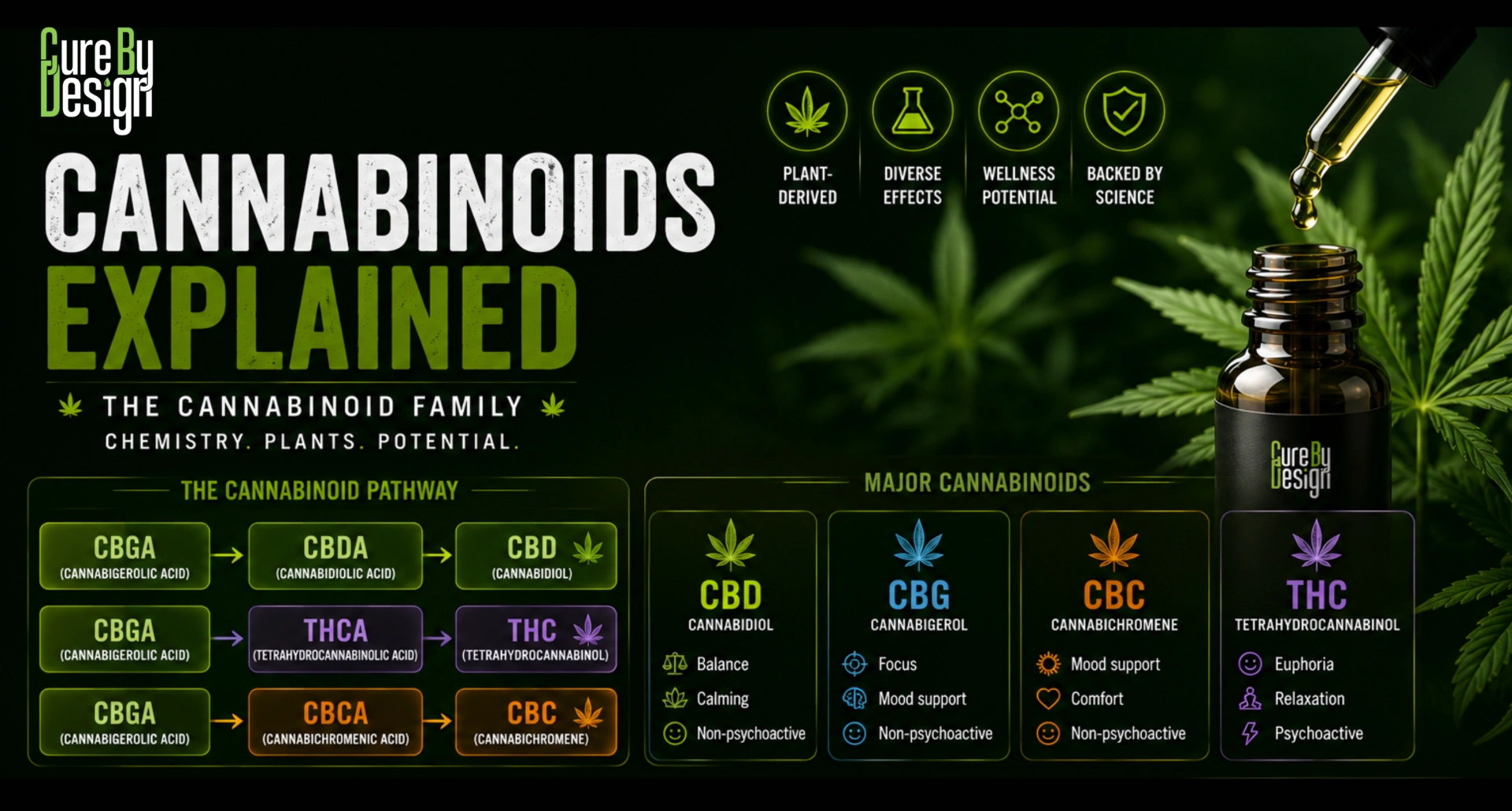
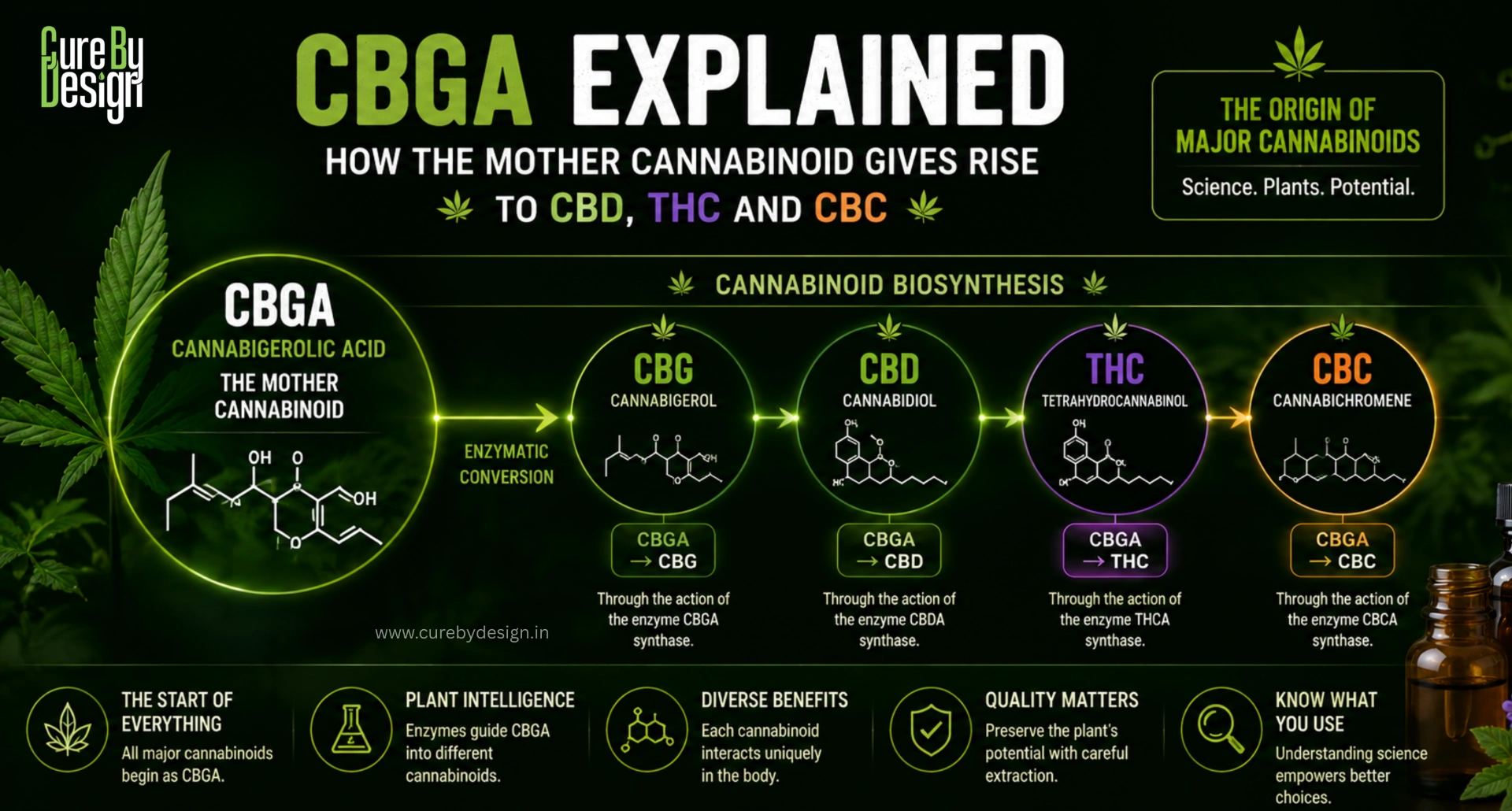
CBGA, or cannabigerolic acid, is a key precursor in the biosynthesis of several major cannabinoids found in Cannabis sativa. It sits at an important branching point in the plant’s cannabinoid pathway and can be converted into the acidic precursors of CBD, THC and CBC.
Because of its central role in this pathway, CBGA is often called the “mother cannabinoid.” The term is useful for explaining its position in cannabinoid biosynthesis, although CBGA itself is an acidic cannabinoid precursor rather than the direct source of every cannabinoid found in cannabis.
In simple terms:
CBGA → CBDA → CBD
CBGA → THCA → THC
CBGA → CBCA → CBC
CBGA can also undergo decarboxylation to form CBG under appropriate conditions.
Understanding what CBGA is helps explain how the cannabis plant produces such a diverse family of cannabinoids.
CBGA at a Glance
| Feature | CBGA |
|---|---|
| Full name | Cannabigerolic acid |
| Common abbreviation | CBGA |
| Plant source | Cannabis sativa |
| Chemical class | Phytocannabinoid precursor |
| Role | Central precursor in cannabinoid biosynthesis |
| Related cannabinoid | CBG |
| Major biosynthetic branches | CBDA, THCA and CBCA |
| Leads to | CBD, THC and CBC after further conversion |
| Psychoactive | CBGA itself is not known for producing the intoxicating effects associated with THC |
| Common nickname | Mother cannabinoid |
Why Is CBGA Called the Mother Cannabinoid?
The phrase mother cannabinoid comes from CBGA’s important position in the biosynthetic pathway of several major cannabinoids.
Cannabinoid production in Cannabis sativa involves multiple biochemical steps. One important step combines olivetolic acid with geranyl diphosphate to form CBGA. CBGA then becomes a branching point from which specialized enzymes can direct the molecule toward different cannabinoid acids.
The major pathways can be simplified as:
CBGA → CBDA → CBD
CBGA → THCA → THC
CBGA → CBCA → CBC
This means CBGA is positioned upstream of several well known cannabinoids.
However, it is important to understand that the plant does not simply produce CBD, THC and CBC directly from CBGA in one step. Instead, specialized enzymes convert CBGA into their respective acidic precursor forms first.
How Does Cannabinoid Biosynthesis Work?
Cannabinoid biosynthesis refers to the biochemical process through which cannabis plants produce phytocannabinoids.
The pathway involves several stages and specialized enzymes. At a simplified level, two important precursor pathways contribute components that eventually combine to form CBGA.
One pathway produces olivetolic acid, while another produces geranyl diphosphate. These molecules are combined through the action of a prenyltransferase enzyme to form CBGA.
From there, CBGA can enter different branches of the cannabinoid pathway.
The simplified pathway
Olivetolic acid + Geranyl diphosphate
↓
CBGA
↓
CBDA | THCA | CBCA
↓
CBD | THC | CBC
The exact biology is more complex than this simplified diagram, but this model is useful for understanding the relationship between CBGA and the major cannabinoids.
CBGA to CBG: What Is the Connection?
One common question is whether CBGA becomes CBG.
The answer is yes, but the relationship is slightly different from the pathways leading to CBD, THC and CBC.
CBGA is the acidic precursor associated with CBG, or cannabigerol. Through decarboxylation, CBGA can form CBG. Heat and other conditions can promote this loss of a carboxyl group.
This gives us:
CBGA → CBG
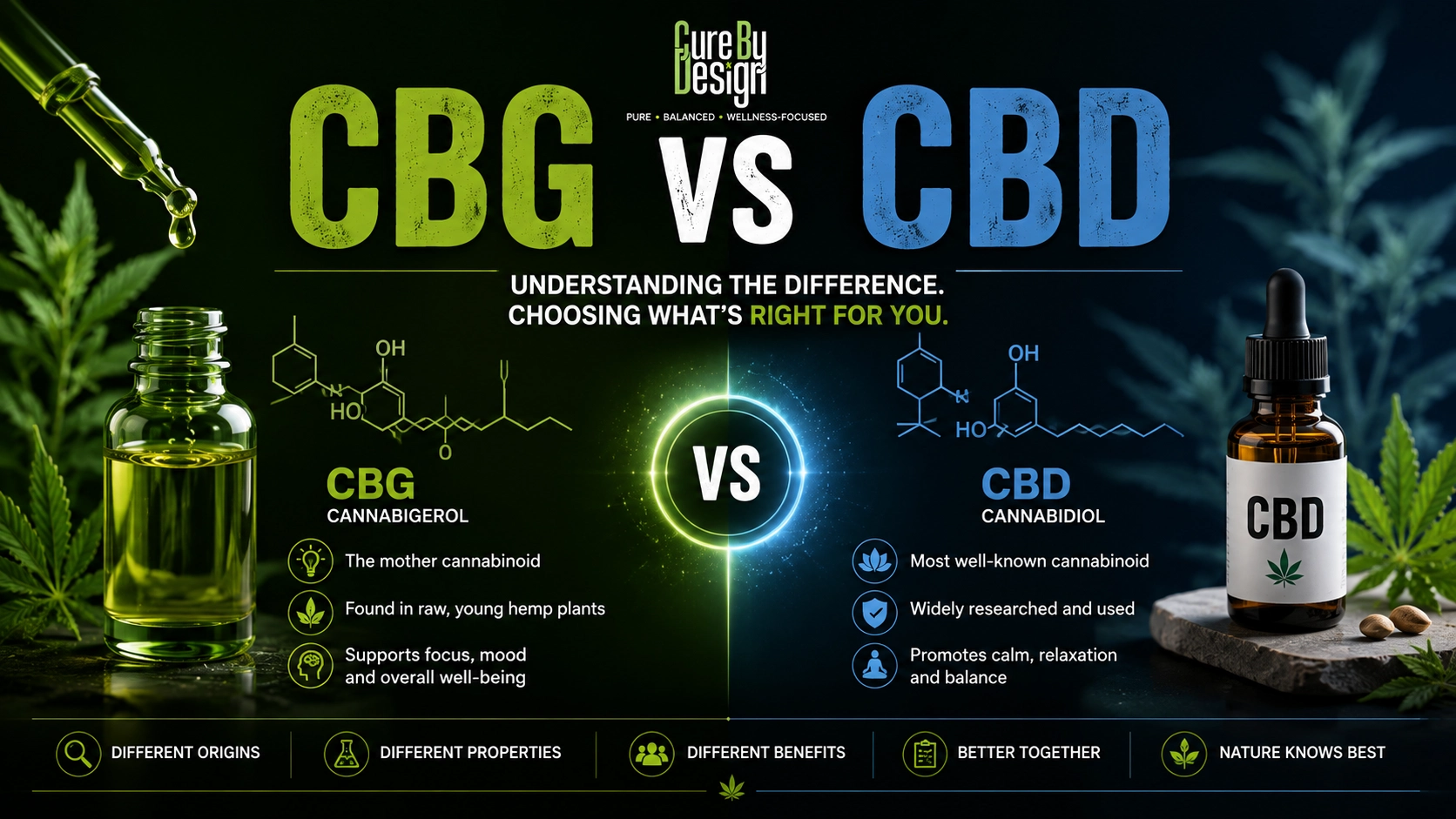
CBG is therefore closely related to CBGA, but they are chemically distinct compounds.
CBGA vs CBG
| Feature | CBGA | CBG |
|---|---|---|
| Full name | Cannabigerolic acid | Cannabigerol |
| Form | Acidic cannabinoid | Neutral cannabinoid |
| Relationship | Precursor | Product of decarboxylation |
| Role in plant | Important biosynthetic intermediate | Cannabinoid present in cannabis |
| Common description | Mother cannabinoid | Cannabinoid derived from CBGA |
This distinction is important when reading cannabinoid labels and scientific literature.
How Does CBGA Become CBD?
CBGA does not directly transform into CBD in a single step.
Instead, a specialized enzyme called cannabidiolic acid synthase, or CBDAS, converts CBGA into CBDA, or cannabidiolic acid.
The pathway is:
CBGA → CBDA → CBD
The first step is enzyme driven. The second involves decarboxylation, where CBDA loses a carboxyl group and forms CBD.
This is one reason why understanding CBGA is useful when learning about CBD. CBGA sits earlier in the plant’s cannabinoid biosynthetic pathway.
How Does CBGA Become THC?
The pathway toward THC follows a similar principle.
CBGA is converted by tetrahydrocannabinolic acid synthase, or THCA synthase, into THCA, or tetrahydrocannabinolic acid.
The simplified pathway is:
CBGA → THCA → THC
THCA can then undergo decarboxylation to form THC. Heat is one important factor that promotes this process.
It is therefore more accurate to say:
CBGA gives rise to THCA, which can subsequently give rise to THC.
CBGA itself should not be confused with THC. They are chemically different cannabinoids with different properties.
How Does CBGA Become CBC?
CBGA also participates in the pathway leading to CBC, or cannabichromene.
A specialized enzyme called cannabichromenic acid synthase, or CBCAS, converts CBGA into CBCA, or cannabichromenic acid.
The pathway is:
CBGA → CBCA → CBC
CBCA can subsequently undergo decarboxylation to form CBC.
This makes CBGA an important connection between several major cannabinoid families.
CBGA, CBD, THC and CBC: What Is the Difference?
Although CBD, THC and CBC can share CBGA as a biosynthetic precursor, they are different cannabinoids.
| Cannabinoid | Full name | Relationship to CBGA | Psychoactive |
|---|---|---|---|
| CBGA | Cannabigerolic acid | Central precursor | Not associated with THC like intoxication |
| CBG | Cannabigerol | Related neutral cannabinoid | Generally considered non intoxicating |
| CBD | Cannabidiol | Derived through CBDA | Non intoxicating |
| THC | Tetrahydrocannabinol | Derived through THCA | Psychoactive |
| CBC | Cannabichromene | Derived through CBCA | Generally considered non intoxicating |
The effects and biological activity of these compounds are not interchangeable. Research into minor cannabinoids continues to expand, and their mechanisms and potential applications are still being studied.
What Enzymes Are Involved in CBGA Biosynthesis?
Enzymes play a crucial role in directing CBGA into different cannabinoid pathways.
Some of the best known enzymes involved in the major branches include:
Cannabidiolic acid synthase
CBDAS helps convert CBGA into CBDA.
CBGA → CBDA
Tetrahydrocannabinolic acid synthase
THCAS helps convert CBGA into THCA.
CBGA → THCA
Cannabichromenic acid synthase
CBCAS helps convert CBGA into CBCA.
CBGA → CBCA
These enzymes help determine which cannabinoid acids are produced by a particular cannabis variety. Genetic differences between plants can therefore influence cannabinoid profiles.
Where Is CBGA Found?
CBGA is produced naturally by Cannabis sativa as part of cannabinoid biosynthesis.
However, CBGA does not necessarily accumulate in large amounts in mature cannabis flowers because much of it can be converted into downstream cannabinoid acids.
Research indicates that CBGA levels can vary depending on the plant’s genetics, developmental stage and other growing conditions. Certain varieties have been developed specifically to produce higher levels of CBGA.
This is why the cannabinoid profile of a plant can change significantly depending on its genetics and stage of development.
Why Is CBGA Important in Cannabis Research?
CBGA is important because it provides researchers with a window into how cannabinoids are produced by the cannabis plant.
Studying CBGA can help researchers understand:
- Cannabinoid biosynthesis
- Plant genetics
- Cannabinoid pathways
- Enzyme activity
- Development of specialized cannabis varieties
- Production of minor cannabinoids
- Potential applications of cannabinoid rich plant extracts
Research into cannabinoid biosynthesis is also relevant to agricultural biotechnology because scientists are investigating ways to influence cannabinoid production through genetics, cultivation and metabolic engineering.
Does CBGA Have Potential Wellness Benefits?
CBGA is an active area of cannabinoid research, but it is important to separate early scientific findings from established health claims.
Laboratory research has investigated CBGA and its interactions with biological targets. Some studies have reported interesting molecular activity, but evidence from laboratory research does not automatically establish a specific benefit in humans.
At present, CBGA should be understood primarily as an important cannabinoid precursor and a subject of ongoing scientific research.
For wellness products, consumers should avoid assuming that the presence of CBGA automatically means a product will produce a particular therapeutic effect.
CBGA vs CBG: Are They the Same?
No. CBGA and CBG are related but different compounds.
CBGA stands for cannabigerolic acid, while CBG stands for cannabigerol.
CBGA is an acidic precursor involved in cannabinoid biosynthesis. CBG is the corresponding neutral cannabinoid formed through decarboxylation.
A simple way to remember the relationship is:
CBGA = acidic precursor
CBG = neutral cannabinoid
This distinction is especially useful when comparing cannabinoid extracts, laboratory reports and product labels.
Does CBGA Become All Cannabinoids?
Not exactly.
CBGA is a major precursor for several important cannabinoids, particularly the cannabinoid acids that lead to CBD, THC and CBC.
However, cannabinoid biosynthesis is a much larger network than the simple CBGA diagram suggests. Cannabis sativa produces a chemically diverse group of phytocannabinoids, and many minor cannabinoids have different biosynthetic relationships and pathways.
So, calling CBGA the mother cannabinoid is a useful educational description, but it should not be interpreted as meaning that every cannabinoid molecule in cannabis necessarily follows exactly the same pathway.
Why Does the CBGA Pathway Matter for Hemp?
Hemp varieties can contain different cannabinoid profiles depending on genetics, cultivation and processing.
Understanding the CBGA pathway helps explain why one plant may produce higher levels of CBD precursors while another may produce different cannabinoid profiles.
The plant’s enzymes effectively influence which direction CBGA moves through the pathway.
For example:
Higher CBDAS activity → greater conversion toward CBDA
Higher THCAS activity → greater conversion toward THCA
Higher CBCAS activity → greater conversion toward CBCA
This is a simplified model, but it illustrates why genetics matter when determining cannabinoid composition.
CBGA and Full Spectrum Hemp Extracts
CBGA can be one of many naturally occurring cannabinoids or cannabinoid precursors found in cannabis derived extracts, depending on the plant material and extraction process.
However, the presence and concentration of CBGA can vary considerably.
If you are evaluating a hemp extract, look beyond marketing terminology and check the certificate of analysis, cannabinoid profile and laboratory testing information where available.
A quality laboratory report can provide a clearer picture of which cannabinoids are actually present and at what concentrations.
CBGA and the Future of Cannabinoid Research
Cannabinoid science is moving beyond the traditional CBD and THC conversation.
Researchers are increasingly studying:
- CBGA
- CBG
- CBC
- CBN
- CBDA
- THCA
- CBCA
- Other minor cannabinoids
This expanding research may help scientists better understand how cannabinoid chemistry, plant genetics and biosynthetic pathways influence the final chemical profile of cannabis and hemp.
CBGA is particularly interesting because it sits at an important branching point in the biosynthetic pathway.
As research develops, scientists may gain a better understanding of how cannabinoid pathways can be influenced to produce specific cannabinoid profiles.
CBGA Biosynthesis Explained Simply
If the entire process feels complicated, remember this simple model:
Step 1: The plant creates CBGA
Cannabis combines key molecular building blocks to produce cannabigerolic acid.
Step 2: CBGA reaches a branching point
Specialized enzymes direct CBGA toward different cannabinoid acids.
Step 3: Different pathways create different compounds
CBGA → CBDA → CBD
CBGA → THCA → THC
CBGA → CBCA → CBC
Step 4: Decarboxylation changes the acidic cannabinoids
Under appropriate conditions, cannabinoid acids can lose a carboxyl group and become their neutral forms.
This is the basic concept behind cannabinoid biosynthesis.
Frequently Asked Questions About CBGA
What is CBGA?
CBGA stands for cannabigerolic acid and is a major precursor in the biosynthesis of several cannabinoids. It can be converted into CBDA, THCA and CBCA, which can subsequently form CBD, THC and CBC.
Why is CBGA called the mother cannabinoid?
CBGA is often called the mother cannabinoid because it sits at a central branching point in the biosynthetic pathway leading to several major cannabinoid acids.
What does CBGA stand for?
CBGA stands for cannabigerolic acid.
Is CBGA the same as CBG?
No. CBGA is cannabigerolic acid, while CBG is cannabigerol. CBGA is an acidic precursor, while CBG is a neutral cannabinoid that can form through decarboxylation.
Does CBGA become CBD?
CBGA can be converted into CBDA through the action of cannabidiolic acid synthase. CBDA can then undergo decarboxylation to form CBD.
Does CBGA become THC?
CBGA can be converted into THCA through the action of tetrahydrocannabinolic acid synthase. THCA can then undergo decarboxylation to form THC.
Does CBGA become CBC?
Yes. CBGA can be converted into CBCA through cannabichromenic acid synthase. CBCA can subsequently form CBC through decarboxylation.
Is CBGA psychoactive?
CBGA is not associated with the intoxicating effects characteristic of THC. However, cannabinoid pharmacology is complex, and CBGA continues to be studied for its biological activity.
Where is CBGA found?
CBGA is naturally produced by Cannabis sativa as part of cannabinoid biosynthesis. Its concentration can vary according to plant genetics, development and other factors.
What is the difference between CBGA and CBDA?
CBGA is a central precursor in cannabinoid biosynthesis, while CBDA is the acidic precursor that can form CBD. CBGA can be converted into CBDA through CBDAS.
What is the difference between CBGA and THCA?
CBGA is a precursor that can be converted into THCA through the action of THCA synthase. THCA can later form THC through decarboxylation.
Is CBGA found in hemp?
Yes. CBGA can occur naturally in hemp and other Cannabis sativa varieties, although the amount can vary significantly between plants and stages of development.
Why is CBGA important for cannabinoid biosynthesis?
CBGA is important because it acts as a central precursor from which several major cannabinoid acids can be produced. It therefore provides an important link between plant biochemistry and the cannabinoid profile of cannabis.
The CBGA Connection: From Mother Cannabinoid to Major Cannabinoids
The relationship can be summarized in one simple diagram:
CBGA
↓
CBG
CBDA → CBD
THCA → THC
CBCA → CBC
This pathway helps explain why CBGA is such an important molecule in cannabis science.
From a single central precursor, specialized enzymes can direct cannabinoid biosynthesis toward several different chemical families.
Final Takeaway
CBGA, or cannabigerolic acid, is one of the most important molecules in cannabinoid biosynthesis. Often called the mother cannabinoid, it sits at a central branching point in the plant’s production of several major cannabinoid acids.
The most important pathways to remember are:
CBGA → CBDA → CBD
CBGA → THCA → THC
CBGA → CBCA → CBC
CBGA is also closely related to CBG, with decarboxylation providing a pathway from CBGA to the neutral cannabinoid CBG.
Understanding what CBGA is provides a foundation for understanding the broader cannabinoid family, including CBD, CBG, THC and CBC.
As cannabinoid research continues to develop, CBGA remains an important subject for researchers studying plant genetics, cannabinoid biosynthesis and the growing diversity of Cannabis sativa chemistry.