Endocannabinoid System Explained: 7 Key Facts About the ECS

What Is the Endocannabinoid System?
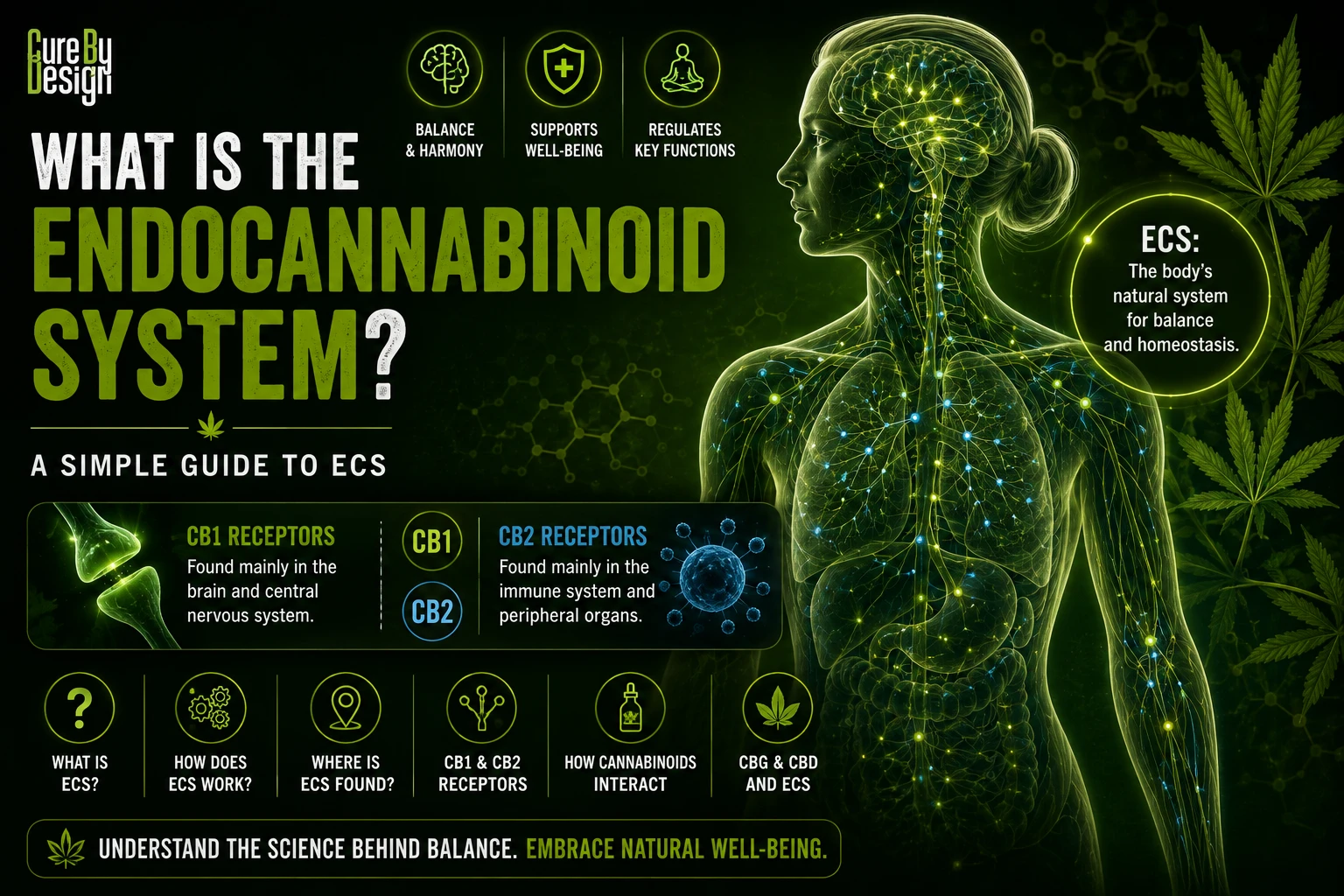
The endocannabinoid system, commonly called the ECS, is a biological signaling system found throughout the human body. It helps regulate communication between cells and contributes to the control of several important physiological processes.
The ECS is made up of three main components:
- Endocannabinoids, which are cannabinoid like molecules naturally produced by the body.
- Cannabinoid receptors, especially CB1 and CB2, which receive and respond to cannabinoid signals.
- Enzymes, which help produce and break down endocannabinoids.
The two best studied endocannabinoids are anandamide, also known as AEA, and 2 arachidonoylglycerol, commonly called 2 AG. The ECS is widely distributed throughout the nervous system and peripheral tissues and is involved in regulating many aspects of cellular communication and physiological function. (PubMed Central (PMC))
In simple terms, you can think of the ECS as one of the body’s internal communication networks. It does not operate as a single organ or gland. Instead, its receptors, signaling molecules and enzymes are distributed across different tissues.
Quick answer: What is the ECS?
The endocannabinoid system is a biological signaling network made up of endocannabinoids, cannabinoid receptors and metabolic enzymes. It helps regulate communication between cells and contributes to processes involved in maintaining physiological balance.
How Does the Endocannabinoid System Work?
The ECS works through a process of cellular signaling.
Unlike hormones that are often produced in one location and transported through the bloodstream, many endocannabinoid signals are produced locally when they are needed.
A simplified sequence looks like this:
Stimulus → endocannabinoid production → receptor activation → cellular response → endocannabinoid breakdown
Endocannabinoids can be produced in response to changes in cellular activity. They then interact with cannabinoid receptors and influence signaling between cells.
After the signal has done its job, enzymes help break down the endocannabinoid molecules. This allows the body to regulate the duration and intensity of the signal. (PubMed Central (PMC))
This process is particularly important in the nervous system, where endocannabinoid signaling can influence communication between neurons.
Why is this important?
The ECS is not simply an “on” or “off” system. It is better understood as a complex signaling network that can fine tune cellular activity depending on the tissue, receptor, cannabinoid and physiological context.
That complexity is one reason researchers continue to investigate the ECS and its relationship with health and disease.
What Does the ECS Do?
One of the most frequently asked questions about the endocannabinoid system is what it actually does.
The ECS is involved in regulating or modulating a wide range of physiological processes. Research has connected endocannabinoid signaling with areas including:
- Nervous system function
- Synaptic communication
- Stress responses
- Appetite and energy balance
- Pain signaling
- Immune system activity
- Inflammatory pathways
- Memory and learning
- Sleep related processes
- Gastrointestinal function
- Reproductive processes
However, it is important to understand that the ECS does not independently control each of these functions. Instead, it interacts with many other biological signaling systems.
Research describes the ECS as a widespread neuromodulatory system involved in central nervous system development, synaptic plasticity and responses to internal and external stimuli. (PubMed)
The ECS and homeostasis
You may often see the ECS described as a system that helps maintain homeostasis.
Homeostasis refers to the body’s ability to maintain relatively stable internal conditions despite changes in the environment.
The ECS appears to contribute to this process by helping regulate cellular communication in different tissues.
This does not mean that the ECS simply “keeps everything balanced.” Its effects depend on factors such as receptor location, cell type, signaling molecule and physiological state.
Where Is the Endocannabinoid System Found?
The ECS is not located in one specific part of the body.
Its components are distributed throughout the central nervous system, peripheral nervous system and many peripheral tissues. Research has identified cannabinoid receptors and endocannabinoid signaling mechanisms in numerous organs and biological systems. (PubMed)
ECS in the brain and nervous system
CB1 receptors are particularly abundant in the central nervous system.
Endocannabinoid signaling in the nervous system can influence the release of neurotransmitters and therefore affect communication between nerve cells. (PubMed Central (PMC))
This helps explain why cannabinoid research has attracted significant interest in neuroscience.
ECS in the immune system
CB2 receptors are strongly associated with immune and peripheral tissues, although they are not exclusively found there.
Researchers have studied CB2 signaling in relation to immune cell activity and inflammatory processes. (PubMed Central (PMC))
ECS throughout the body
Components of the ECS have also been studied in tissues and systems involving:
- Digestive function
- Skin
- Muscles
- Bone
- Reproductive tissues
- Cardiovascular tissues
- Immune tissues
- Peripheral nerves
The exact distribution and activity of cannabinoid receptors can vary considerably between tissues and physiological conditions.
What Are CB1 and CB2 Receptors?
CB1 and CB2 are the two best established cannabinoid receptors.
Both belong to a large family of receptors known as G protein coupled receptors, or GPCRs. They respond to endocannabinoids and can also interact with plant derived cannabinoids and certain synthetic cannabinoids. (PubMed Central (PMC))
CB1 receptors
CB1 receptors are particularly abundant in the central nervous system.
They are found in many regions of the brain and nervous system and play an important role in regulating neurotransmitter release.
Because CB1 receptors are widely expressed in the brain, their activation can influence processes involving:
- Memory
- Movement
- Mood
- Appetite
- Sensory processing
- Neurotransmitter signaling
THC, the primary psychoactive cannabinoid in cannabis, can activate CB1 receptors. This interaction is a major reason THC can produce psychoactive effects. (PubMed Central (PMC))
CB2 receptors
CB2 receptors are strongly associated with peripheral tissues and immune cells.
Research has investigated CB2 signaling in areas including immune regulation, inflammation and pain related pathways. (PubMed Central (PMC))
However, describing CB1 as simply the “brain receptor” and CB2 as the “immune receptor” is an oversimplification.
Both receptors can occur in multiple tissues, and their expression can change depending on physiological conditions.
CB1 vs CB2 at a glance
| Feature | CB1 | CB2 |
|---|---|---|
| Main distribution | Central nervous system | Peripheral and immune tissues |
| Receptor type | GPCR | GPCR |
| Major role | Neuromodulation and neurotransmitter signaling | Immune and peripheral signaling |
| Activated by endocannabinoids | Yes | Yes |
| Interacts with phytocannabinoids | Yes | Yes |
What Are Endocannabinoids?
Endocannabinoids are molecules naturally produced by the body that can interact with cannabinoid receptors.
The two best studied endocannabinoids are:
Anandamide
Anandamide is also called N arachidonoylethanolamine, or AEA.
It was one of the first endogenous cannabinoids identified and can activate cannabinoid receptors.
2 AG
2 arachidonoylglycerol, or 2 AG, is another major endocannabinoid.
It is particularly important in nervous system signaling and can activate both CB1 and CB2 receptors.
These molecules are different from cannabinoids found in the cannabis plant.
That distinction is important:
Endocannabinoids are produced naturally by the body.
Phytocannabinoids are cannabinoids produced by plants.
Synthetic cannabinoids are manufactured compounds designed to interact with cannabinoid signaling pathways.
Endocannabinoid System and Cannabinoids: What Is the Connection?
The relationship between the endocannabinoid system and cannabinoids is at the heart of modern cannabinoid research.
Cannabinoids can be divided broadly into three categories:
1. Endocannabinoids
Produced naturally by the body.
Examples include:
- Anandamide
- 2 AG
2. Phytocannabinoids
Produced naturally by plants.
Examples include:
- CBD
- CBG
- THC
- CBC
- CBDa
- THCa
3. Synthetic cannabinoids
Produced through chemical synthesis.
These may be designed to activate, block or otherwise modify cannabinoid receptors and related signaling pathways.
Different cannabinoids interact with the ECS in different ways. Some can directly activate cannabinoid receptors, while others may influence the system indirectly or interact with additional receptor systems. (PubMed)
This is why it is inaccurate to assume that every cannabinoid produces the same effects.
How Do Cannabinoids Interact With the ECS?
Cannabinoids can influence the ECS through several mechanisms.
Some cannabinoids interact directly with CB1 or CB2 receptors. Others have weaker or different interactions with these receptors and may affect additional molecular targets.
For example, THC can activate CB1 receptors and CB2 receptors.
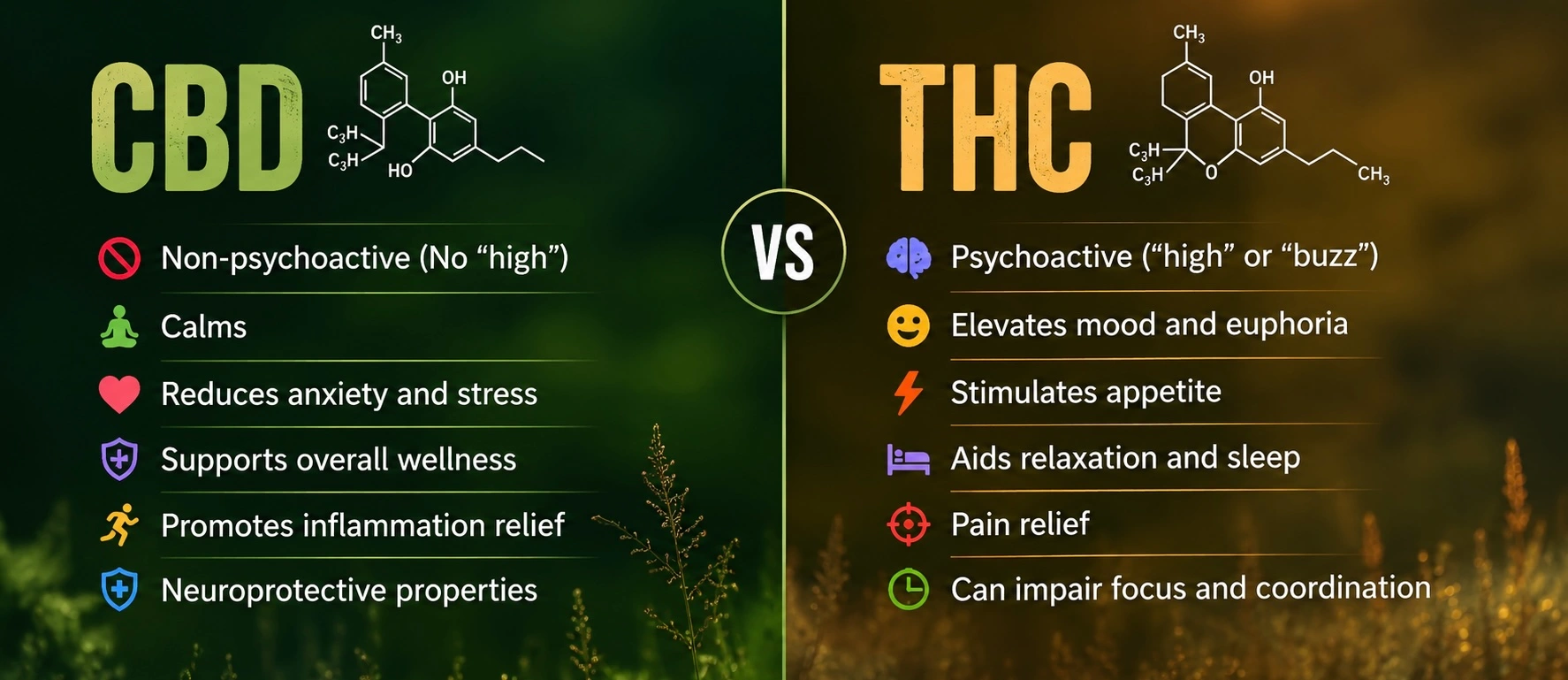
CBD has a different pharmacological profile and does not behave like THC at CB1 receptors.
Other cannabinoids, including CBG, are being investigated for their interactions with cannabinoid receptors and other biological targets.
The overall response can depend on:
- The cannabinoid involved
- The amount used
- Receptor distribution
- Tissue type
- Individual biology
- Other cannabinoids present
- Other compounds such as terpenes
- The route of administration
This complexity is one reason cannabinoid research cannot always be reduced to simple claims such as “this cannabinoid activates the ECS.”
CBG and the ECS
CBG, or cannabigerol, is a phytocannabinoid that has attracted increasing research interest.
CBG is structurally related to other major phytocannabinoids and can interact with cannabinoid receptors. Research has also investigated CBG interactions with additional molecular targets.
CBG is sometimes called the “mother cannabinoid” because cannabigerolic acid, or CBGA, is a biosynthetic precursor involved in the formation of several major cannabinoid acids in the cannabis plant.
However, the phrase “mother cannabinoid” should not be interpreted to mean that CBG is the source of every cannabinoid in the human body.
CBG and ECS research
Research into CBG is still developing.
Scientists are investigating its potential interactions with:
- CB1 receptors
- CB2 receptors
- Other receptor systems
- Neurobiological pathways
- Inflammatory signaling pathways
Because much of the research remains preclinical, more human studies are needed before strong conclusions can be made about specific health benefits.
CBD and the ECS
CBD, or cannabidiol, is another major phytocannabinoid.
Unlike THC, CBD does not produce the same intoxicating effects associated with CB1 receptor activation.
CBD has a complex pharmacological profile. Research suggests that CBD can influence the endocannabinoid system through mechanisms that differ from those of THC, while also interacting with other receptor and signaling systems. (PubMed)
This distinction is important when comparing CBD with THC or other cannabinoids.
CBD and ECS research
Scientists have investigated CBD in relation to:
- Endocannabinoid signaling
- Cannabinoid receptors
- TRP channels
- Serotonin related pathways
- Other molecular targets
The scientific evidence varies significantly depending on the specific effect being studied.
Therefore, CBD should not be presented as a universal treatment for every condition.
CBG vs CBD: How Are They Different?
CBG and CBD are both phytocannabinoids, but they are chemically distinct and can interact with biological targets differently.
| Feature | CBG | CBD |
|---|---|---|
| Full name | Cannabigerol | Cannabidiol |
| Category | Phytocannabinoid | Phytocannabinoid |
| Intoxicating like THC | No | No |
| ECS interaction | Interacts with cannabinoid receptors and other targets | Complex and generally indirect interaction with CB1 and CB2 |
| Research status | Emerging research | More extensively studied |
| Main research interest | Multiple receptor and signaling pathways | ECS modulation and several other biological pathways |
Neither cannabinoid should automatically be considered “better.”
The appropriate choice depends on the product, formulation, individual needs and the evidence available for the intended use.
The ECS and Wellness: What Does the Science Actually Say?
The endocannabinoid system is an important area of biological research, but it is also frequently surrounded by exaggerated health claims.
A science based approach requires separating what is established from what is still being investigated.
What is well established?
Researchers have established that:
- The ECS exists in humans and other vertebrates.
- It includes cannabinoid receptors, endocannabinoids and metabolic enzymes.
- CB1 and CB2 are major cannabinoid receptors.
- Endocannabinoid signaling plays important roles in nervous system function.
- Endocannabinoids such as AEA and 2 AG are naturally produced by the body.
- Plant cannabinoids can interact with cannabinoid receptors and other molecular targets. (PubMed Central (PMC)
)
What is still being investigated?
Researchers continue to investigate:
- How ECS activity changes with different health conditions
- How individual cannabinoids influence ECS signaling
- How CBG interacts with different biological targets
- How CBD modifies cannabinoid and non cannabinoid pathways
- How the ECS could be targeted therapeutically
- How differences in ECS signaling may influence individual responses
There is still much to learn about how the ECS functions in humans under different physiological and pathological conditions. (PubMed)
Why Is the Endocannabinoid System Important?
The ECS is important because it connects many different forms of cellular communication.
Rather than functioning as an isolated system, it interacts with neurotransmitters, immune signaling pathways, lipid metabolism and other biological networks.
This makes the ECS an important area of research in neuroscience, pharmacology, immunology and cannabinoid science.
Understanding the ECS also makes it easier to understand why cannabinoids such as CBD, CBG and THC can behave differently in the body.
Instead of thinking about cannabinoids as one group with identical effects, it is more accurate to understand each cannabinoid as a distinct molecule with its own pharmacological profile.
Frequently Asked Questions About the Endocannabinoid System
What is the Endocannabinoid System?
The endocannabinoid system is a biological signaling network made up primarily of endocannabinoids, cannabinoid receptors such as CB1 and CB2, and enzymes responsible for producing and breaking down endocannabinoids. It helps regulate cellular communication across the nervous system and many peripheral tissues.
What does the ECS do?
The ECS helps modulate several physiological processes, including neurotransmitter signaling, nervous system activity, immune signaling, appetite, pain related pathways and other processes involved in maintaining physiological balance.
Where is the Endocannabinoid System found?
The ECS is found throughout the body. Its components occur in the central nervous system, peripheral nervous system and numerous peripheral tissues. CB1 receptors are particularly abundant in the central nervous system, while CB2 receptors are strongly associated with peripheral and immune tissues.
What are CB1 and CB2 receptors?
CB1 and CB2 are the two best established cannabinoid receptors. Both are G protein coupled receptors. CB1 is particularly abundant in the central nervous system, while CB2 is strongly associated with immune and peripheral tissues.
How do cannabinoids interact with the ECS?
Different cannabinoids interact with the ECS in different ways. Some cannabinoids can activate cannabinoid receptors, while others influence receptor activity indirectly or interact with additional biological targets. THC, CBD and CBG therefore have different pharmacological profiles.
Is CBD part of the endocannabinoid system?
CBD is not an endocannabinoid because it comes from the cannabis plant rather than being naturally produced by the human body. CBD is a phytocannabinoid that can interact with the ECS and other molecular pathways.
Is CBG an endocannabinoid?
No. CBG is a phytocannabinoid produced by the cannabis plant. It is different from endocannabinoids such as anandamide and 2 AG, which are naturally produced by the body.
Does the ECS affect sleep?
Endocannabinoid signaling has been studied in relation to sleep and the sleep wake cycle. However, the relationship is complex, and the effects of individual cannabinoids can vary. More research is needed to understand how specific cannabinoid interventions influence sleep in humans.
Does the ECS affect stress?
Endocannabinoid signaling is involved in neural circuits associated with stress responses. Researchers are studying how changes in ECS activity may influence stress related processes and how cannabinoids may modify these pathways.
Does everyone have an endocannabinoid system?
Yes. The endocannabinoid system is a biological signaling system found in humans and other vertebrates. Its receptors and signaling components are distributed across multiple tissues.
Is the ECS the same as the cannabis system?
No. The ECS is a biological system that naturally exists in the human body. Cannabis plants produce phytocannabinoids that can interact with this system, but the ECS itself is not created by cannabis.
Can cannabinoids “boost” the ECS?
It is better to say that cannabinoids can modulate or interact with ECS signaling rather than simply “boost” the ECS. Different cannabinoids have different mechanisms of action, and their effects depend on the specific molecule and biological context.
Final Takeaway
The endocannabinoid system is a complex biological signaling network that plays an important role in communication between cells.
Its main components include endocannabinoids, cannabinoid receptors and metabolic enzymes. The two best studied cannabinoid receptors are CB1 and CB2, while anandamide and 2 AG are two of the best studied endocannabinoids.
Plant derived cannabinoids such as CBD, CBG and THC can interact with the ECS, but they do so in different ways.
Understanding these differences is essential for understanding modern cannabinoid science.
As research continues, the ECS may provide further insight into how the nervous system, immune system and other biological processes communicate and adapt. At the same time, consumers should distinguish established scientific findings from early research and marketing claims.
The ECS is not simply about cannabis. It is a naturally occurring biological system that exists within us and continues to be an important area of scientific research.
Medical and scientific disclaimer
This article is intended for educational purposes only and does not constitute medical advice, diagnosis or treatment. Research into cannabinoids and the endocannabinoid system is ongoing. If you are considering cannabinoid products for a health condition or are taking medication, speak with a qualified healthcare professional.