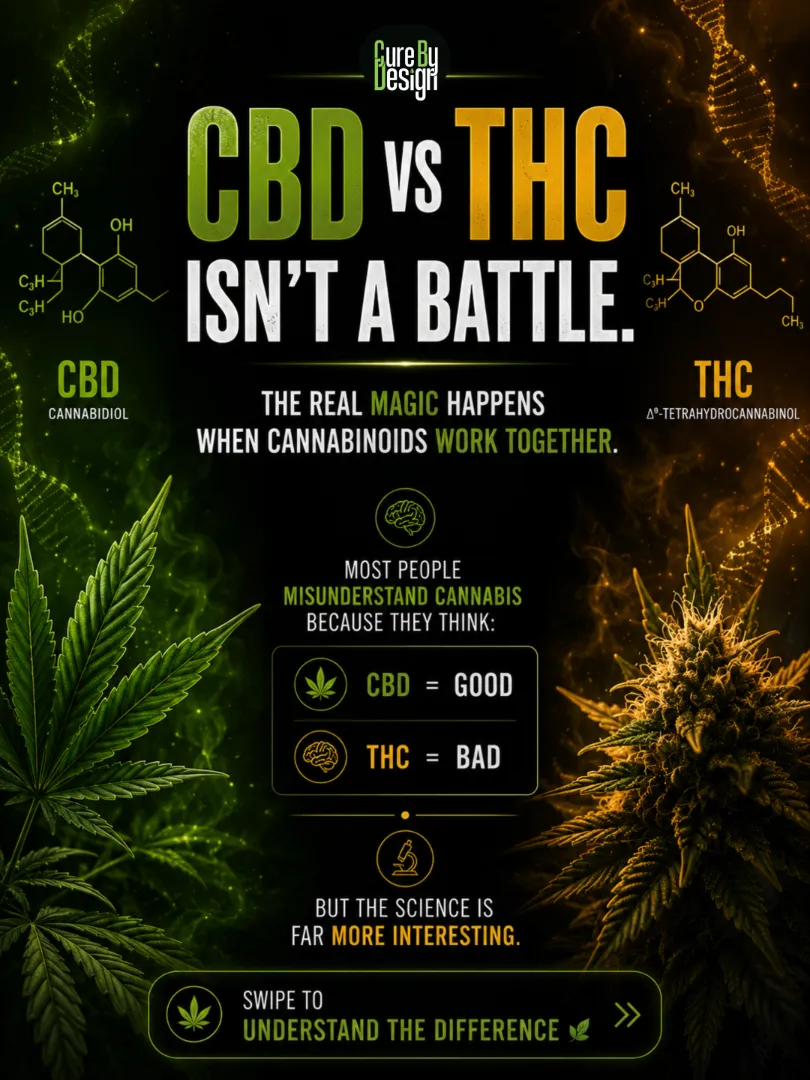
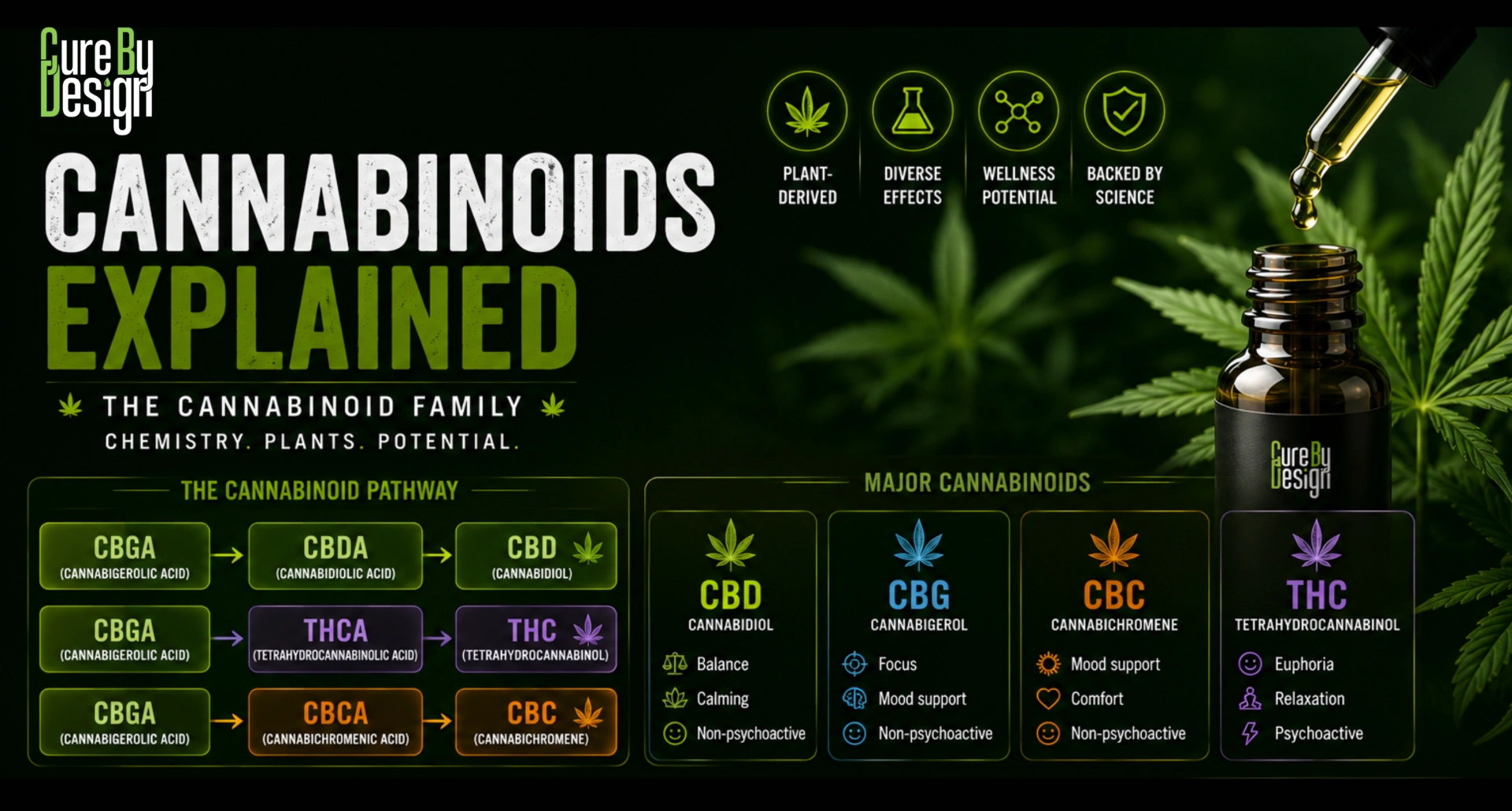
CBD and THC are the two most recognized compounds found in cannabis.
Although they originate from the same plant, they affect the human body in very different ways.
As awareness around cannabis wellness continues to grow globally, more people are becoming curious about how cannabinoids work and what separates CBD from THC.
For years, cannabis conversations were dominated by stigma and misinformation. But modern science is now uncovering something much deeper — the relationship between cannabinoids and the body’s Endocannabinoid System (ECS).
Understanding the difference between CBD and THC is important for anyone exploring cannabis wellness, recovery support, relaxation, or plant-based health solutions.
Let’s explore the science behind these powerful cannabis compounds.
What You’ll Learn About CBD vs THC
In this guide, we’ll cover:
- What CBD is
- What THC is
- The science behind cannabinoids
- Psychoactive vs non-psychoactive effects
- How CBD and THC interact with the brain
- Wellness and recovery support
- Sleep and relaxation benefits
- The Endocannabinoid System explained
- CBD wellness in India
- Common myths about cannabis compounds
- Frequently asked questions about CBD and THC
What Is CBD?
CBD, also known as Cannabidiol, is a naturally occurring cannabinoid found in hemp and cannabis plants.
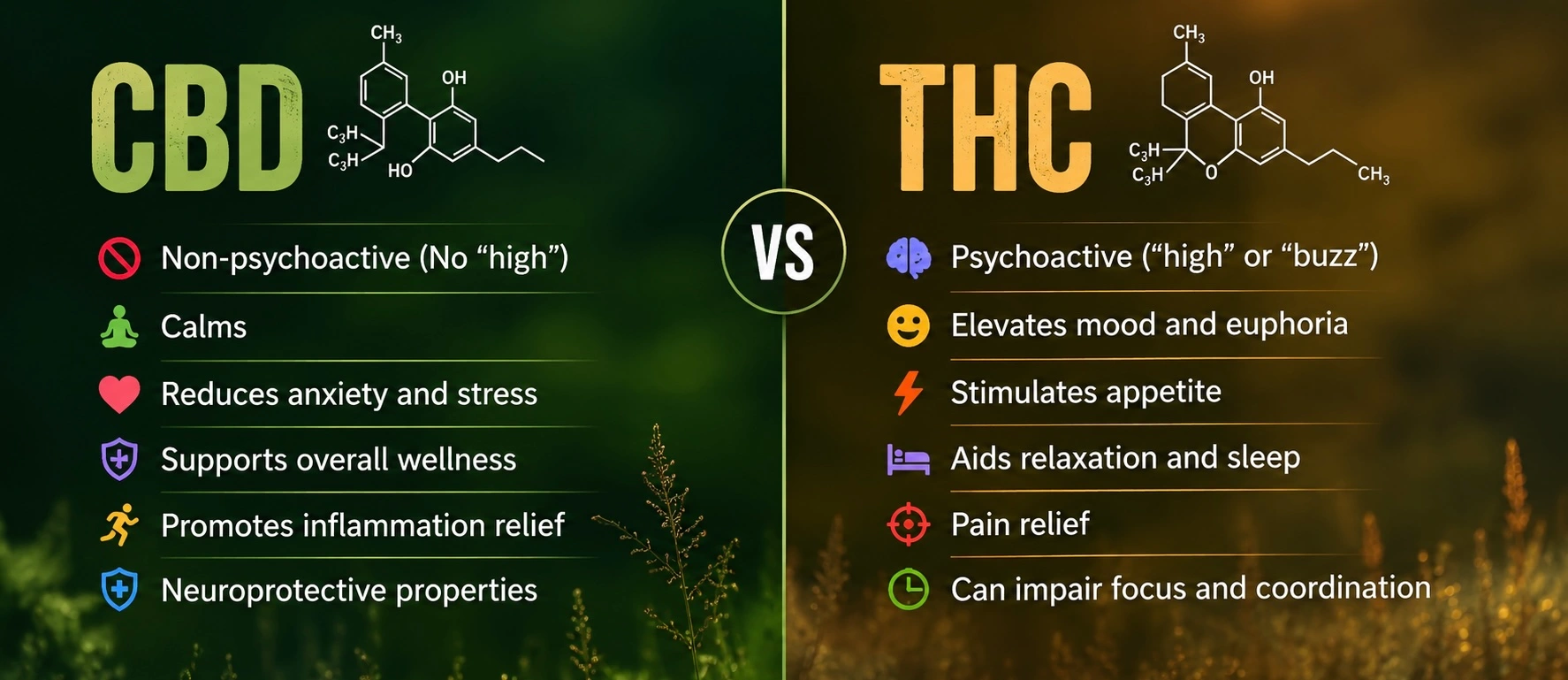
Unlike THC, CBD is non-psychoactive, meaning it does not create the intoxicating “high” commonly associated with cannabis.
Instead, CBD is widely explored for its potential wellness-supporting properties.
Many people use CBD as part of daily wellness routines focused on:
CBD has become especially popular because it allows individuals to explore cannabis wellness without experiencing intoxication or mental impairment.
Modern researchers continue studying how CBD interacts with the body’s internal biological systems to support balance and homeostasis.
What Is THC?
THC, or Tetrahydrocannabinol, is another major cannabinoid naturally found in cannabis plants.
Unlike CBD, THC is psychoactive.
This means THC can influence mood, perception, sensory experience, and mental state.
THC is responsible for the euphoric “high” commonly linked with cannabis use.
Researchers continue studying how THC may affect:
- Mood elevation
- Relaxation
- Appetite stimulation
- Sleepiness
- Pain perception
- Sensory awareness
THC interacts more directly with receptors in the brain, which is why its effects are more immediately noticeable compared to CBD.
In regulated wellness systems, THC formulations are often carefully measured to maintain balance and responsible usage.
Understanding Cannabinoids
CBD and THC are both cannabinoids.
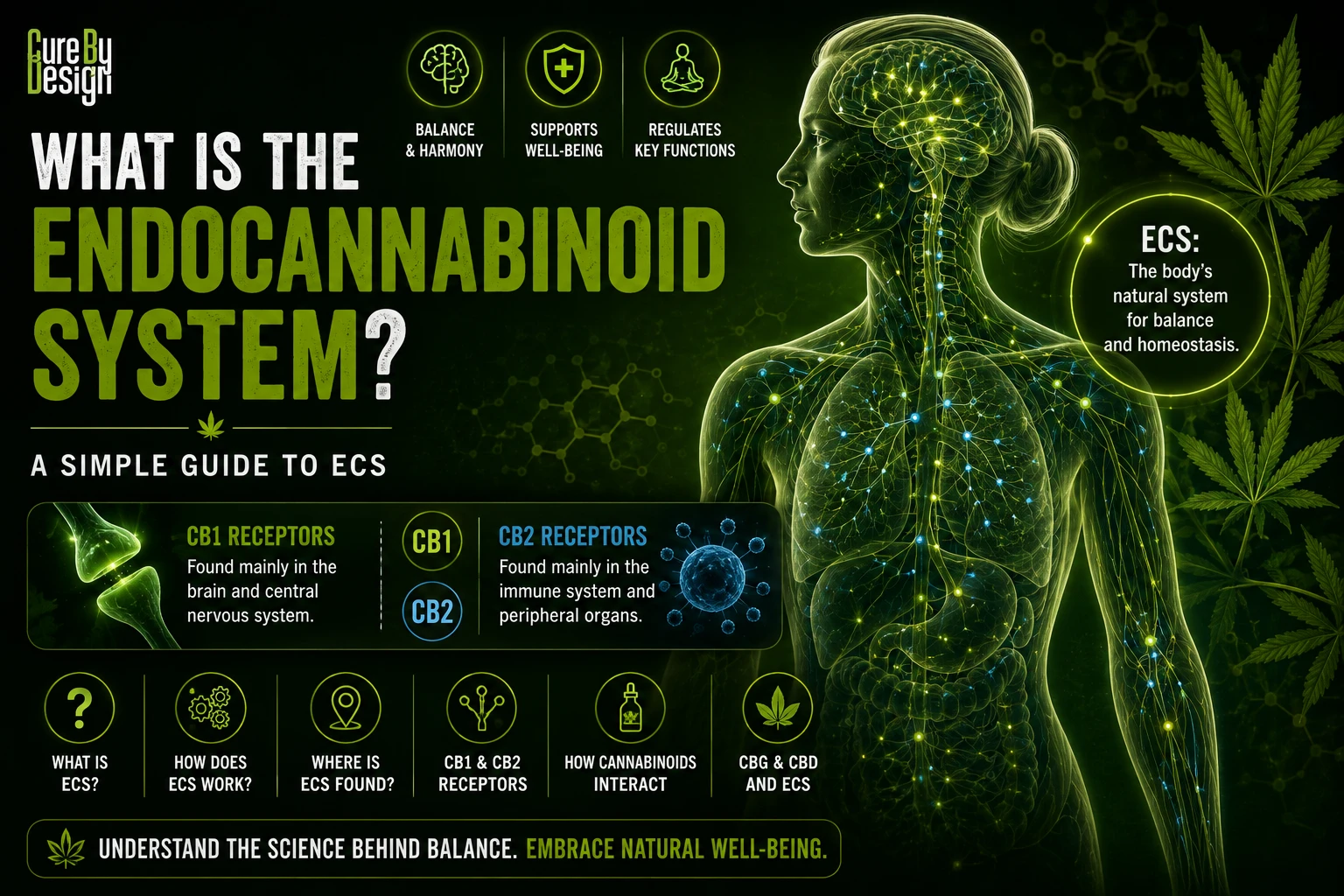
Cannabinoids are natural compounds that interact with the body’s Endocannabinoid System (ECS).
The cannabis plant contains more than 100 cannabinoids, but CBD and THC are the most researched and widely discussed.
Each cannabinoid affects the body differently depending on:
- Receptor interaction
- Dosage
- Formulation
- Individual biology
- Delivery method
Modern cannabis science focuses on understanding how cannabinoids may contribute to physical and mental wellness support.
The Endocannabinoid System (ECS): The Science Behind Cannabis
One of the biggest breakthroughs in cannabis science was the discovery of the Endocannabinoid System.
The ECS is a biological signaling network found throughout the human body.
Scientists believe it plays an important role in maintaining balance, also known as homeostasis.
The ECS helps regulate several important functions including:
- Sleep
- Mood
- Stress response
- Recovery
- Appetite
- Immune balance
- Pain perception
- Emotional regulation
The body naturally produces compounds called endocannabinoids.
Cannabinoids like CBD and THC interact with this system in unique ways.
This is why cannabis compounds can influence multiple wellness-related functions.
Learn more about the Endocannabinoid System:
https://www.ncbi.nlm.nih.gov/pmc/articles/PMC5877694/
CBD vs THC: The Biggest Difference
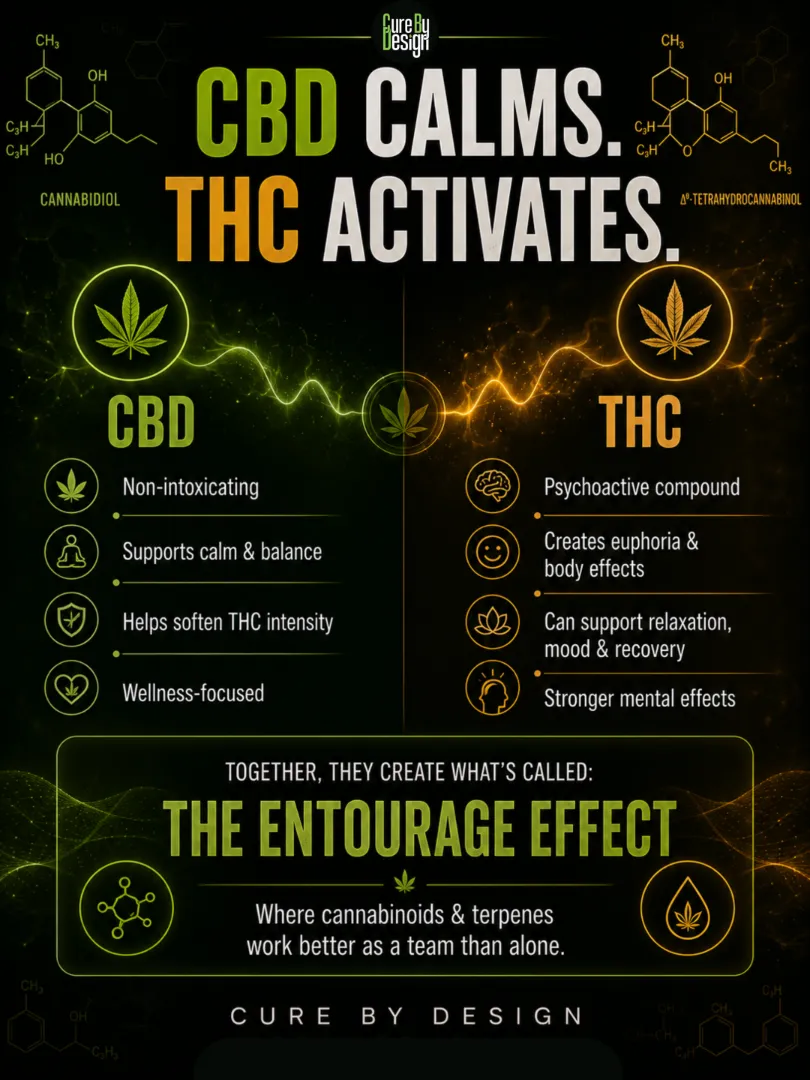
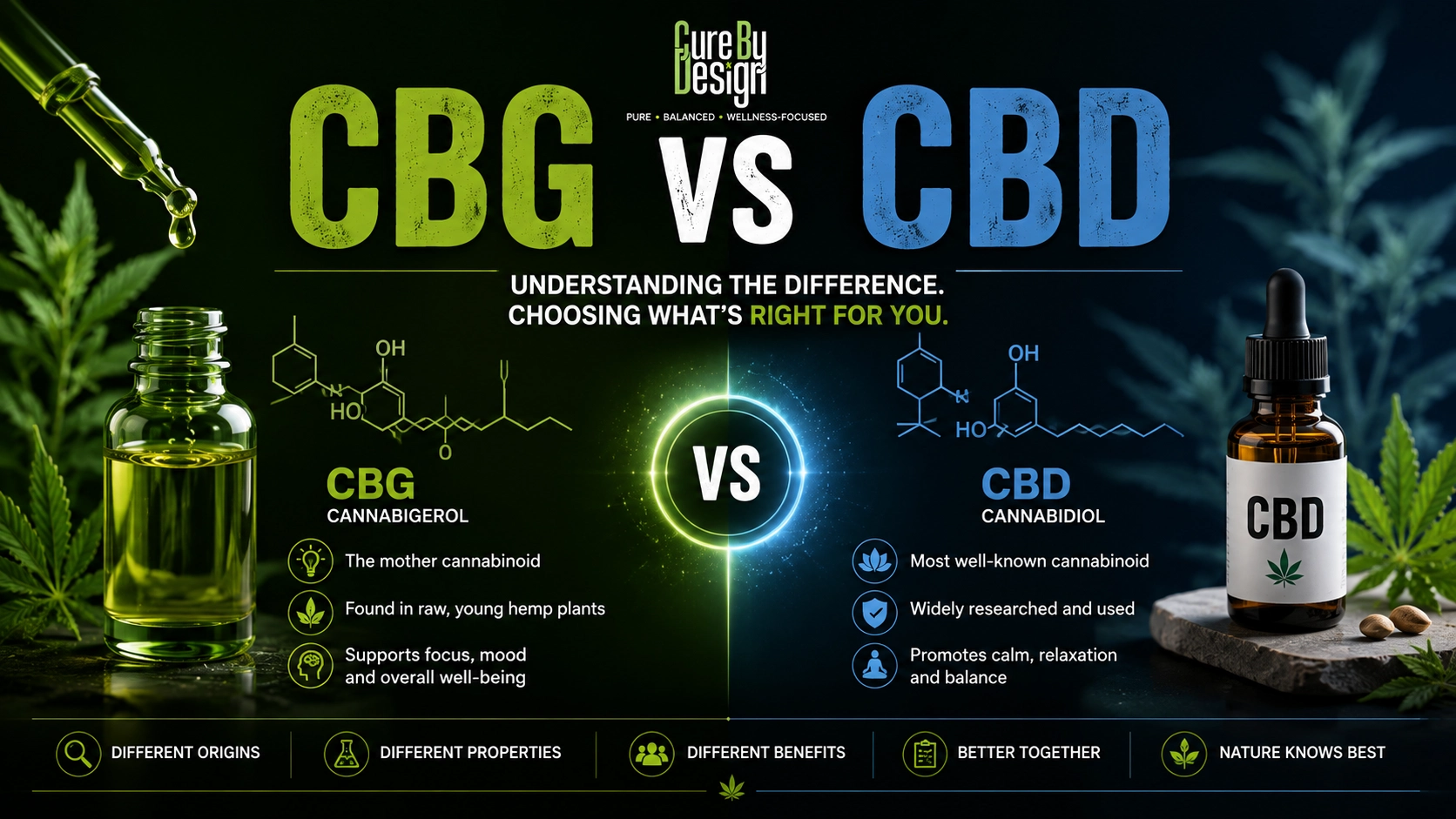
The main difference between CBD and THC is psychoactivity.
CBD
CBD does not intoxicate or impair mental clarity.
It is generally associated with:
- Calmness
- Relaxation
- Recovery support
- Stress balance
- Wellness-focused routines
Most people use CBD because it supports wellness while allowing them to remain functional and mentally clear.
THC
THC is psychoactive and may alter perception and mood.
It is commonly associated with:
- Euphoria
- Relaxation
- Sleepiness
- Increased appetite
- Altered sensory experience
Because THC directly affects brain receptors, excessive use may impair coordination, focus, or short-term memory in some individuals.
Both cannabinoids affect the body differently, which is why wellness goals often determine which cannabinoid someone explores.
How CBD Affects the Brain
CBD works more indirectly within the Endocannabinoid System.
Researchers believe CBD may influence balance and communication between receptors rather than strongly binding to them.
CBD is commonly studied for its possible role in supporting:
- Calmness
- Stress management
- Recovery support
- Emotional balance
- Nervous system wellness
Many people prefer CBD because it allows them to experience cannabis-based wellness without intoxication.
CBD wellness products are now available in several forms including:
- CBD oils
- Capsules
- Gummies
- Topicals
- Wellness tinctures
As interest grows, researchers continue studying CBD’s broader wellness applications.
How THC Affects the Brain
THC interacts more directly with CB1 receptors located in the brain and nervous system.
This interaction influences neurotransmitter activity and sensory processing.
THC is commonly associated with:
- Mood elevation
- Relaxation
- Euphoria
- Appetite stimulation
- Sleepiness
- Sensory enhancement
However, THC can also affect:
- Coordination
- Focus
- Short-term memory
- Reaction time
Because THC directly influences neurological pathways, responsible and measured usage is extremely important.
Modern cannabis wellness emphasizes education, transparency, and safe formulation standards.
CBD vs THC for Stress and Mental Wellness
Stress management is one of the most common reasons people explore cannabinoids.
CBD is widely associated with:
- Relaxation
- Calmness
- Emotional balance
- Reduced stress response
Many wellness users include CBD in nighttime routines, meditation practices, or recovery-focused lifestyles.
THC, on the other hand, may create temporary relaxation and mood elevation, but effects can vary depending on dosage and individual response.
Modern cannabis science continues exploring how cannabinoids influence emotional wellness and neurological balance.
CBD vs THC for Sleep Support
Sleep wellness is another major area of cannabis research.
CBD is commonly explored for:
- Relaxation before bedtime
- Stress reduction
- Supporting calm nighttime routines
THC is often associated with:
- Sedation
- Drowsiness
- Deep relaxation
Some wellness formulations combine cannabinoids strategically to create balanced sleep-support products.
As cannabis wellness evolves, personalized formulations are becoming increasingly common.
CBD vs THC for Recovery and Pain Support
Researchers are actively studying cannabinoids for recovery and physical wellness support.
CBD is commonly explored for:
- Recovery support
- Inflammation response
- Physical balance
- Muscle recovery
THC is often explored for:
- Pain perception support
- Relaxation
- Comfort management
Scientists continue studying how cannabinoids may influence recovery-related pathways through the Endocannabinoid System.
This area of cannabis science is expanding rapidly worldwide.
CBD Wellness in India
India has a deep historical connection with cannabis and plant-based wellness traditions.
Ancient Ayurvedic texts referenced cannabis in medicinal and spiritual contexts centuries ago.
Today, regulated hemp-derived wellness products are helping modern consumers rediscover cannabinoids through more transparent and controlled systems.
CBD wellness in India continues growing as awareness increases around:
- Recovery support
- Mental wellness
- Sleep balance
- Natural wellness alternatives
- Plant-based lifestyles
Modern consumers are increasingly seeking wellness solutions that focus on balance rather than temporary symptom suppression.
Common Myths About CBD and THC
False.
Although they come from the same plant, they interact with the body differently and produce different effects.
Myth 2: CBD Makes You High
CBD is non-psychoactive and does not create intoxication.
Myth 3: All Cannabis Products Cause Impairment
Not all cannabis-derived products are psychoactive.
CBD wellness products are commonly used specifically because they do not impair mental clarity.
Myth 4: Cannabis Science Is New
Cannabis has been studied and used historically for thousands of years.
Modern science is now rediscovering and validating many ancient observations.
Responsible Cannabis Wellness Matters
As cannabis wellness becomes more mainstream, education becomes increasingly important.
Responsible cannabis wellness includes:
- Understanding formulations
- Knowing cannabinoid differences
- Choosing trusted brands
- Following legal guidelines
- Using products responsibly
- Prioritizing transparency and testing
The future of cannabis wellness is rooted in informed decision-making and scientific understanding.
Explore Premium CBD Wellness Solutions
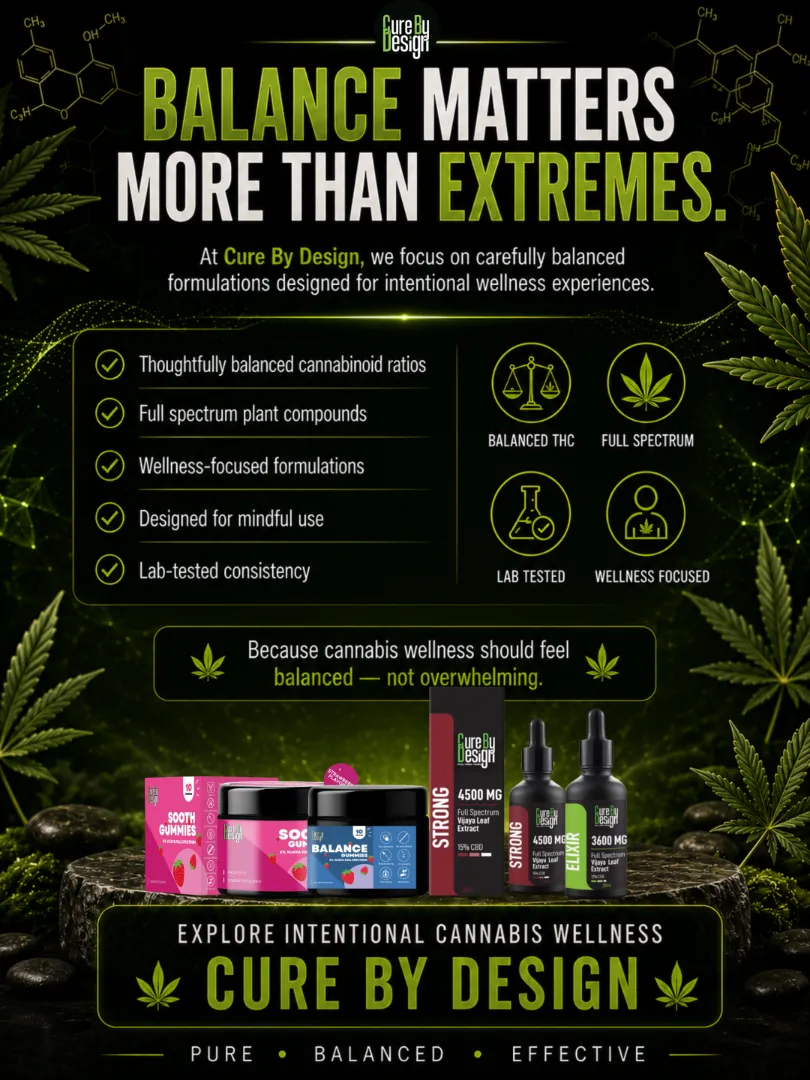
If you’re interested in exploring safe and high-quality cannabis wellness solutions, discover premium CBD and hemp products from Cure By Design.
Explore:
https://www.curebydesign.in
You can also learn more about:
- CBD for sleep support
- Recovery-focused wellness
- Hemp wellness products
- Cannabis and brain science
- Plant-based recovery support
Frequently Asked Questions About CBD vs THC
Does CBD make you high?
No. CBD is non-psychoactive and does not create intoxication.
Is THC psychoactive?
Yes. THC is associated with psychoactive effects including euphoria and altered sensory perception.
What is the Endocannabinoid System?
The ECS is a biological signaling system involved in maintaining internal balance across functions like sleep, mood, stress response, recovery, and appetite.
Is CBD legal in India?
Hemp-derived CBD wellness products may be legally available in India depending on compliance and formulation standards.
Which is better: CBD or THC?
There is no universal answer.
CBD and THC interact differently with the body and support different wellness goals.
The right option depends on:
- Individual wellness needs
- Lifestyle
- Product formulation
- Professional guidance
Final Thought
CBD and THC may originate from the same plant, but they affect the human body in very different ways.
One is commonly associated with wellness balance and recovery support.
The other is known for psychoactive effects and mood alteration.
As cannabis science continues evolving, understanding these cannabinoids is becoming increasingly important for informed and responsible wellness decisions.
The future of cannabis wellness is not just about products.
It is about education, balance, transparency, and understanding how the human body interacts with cannabinoids naturally.