

Blog
Can Taking CBD Reduce Your Cortisol Levels?

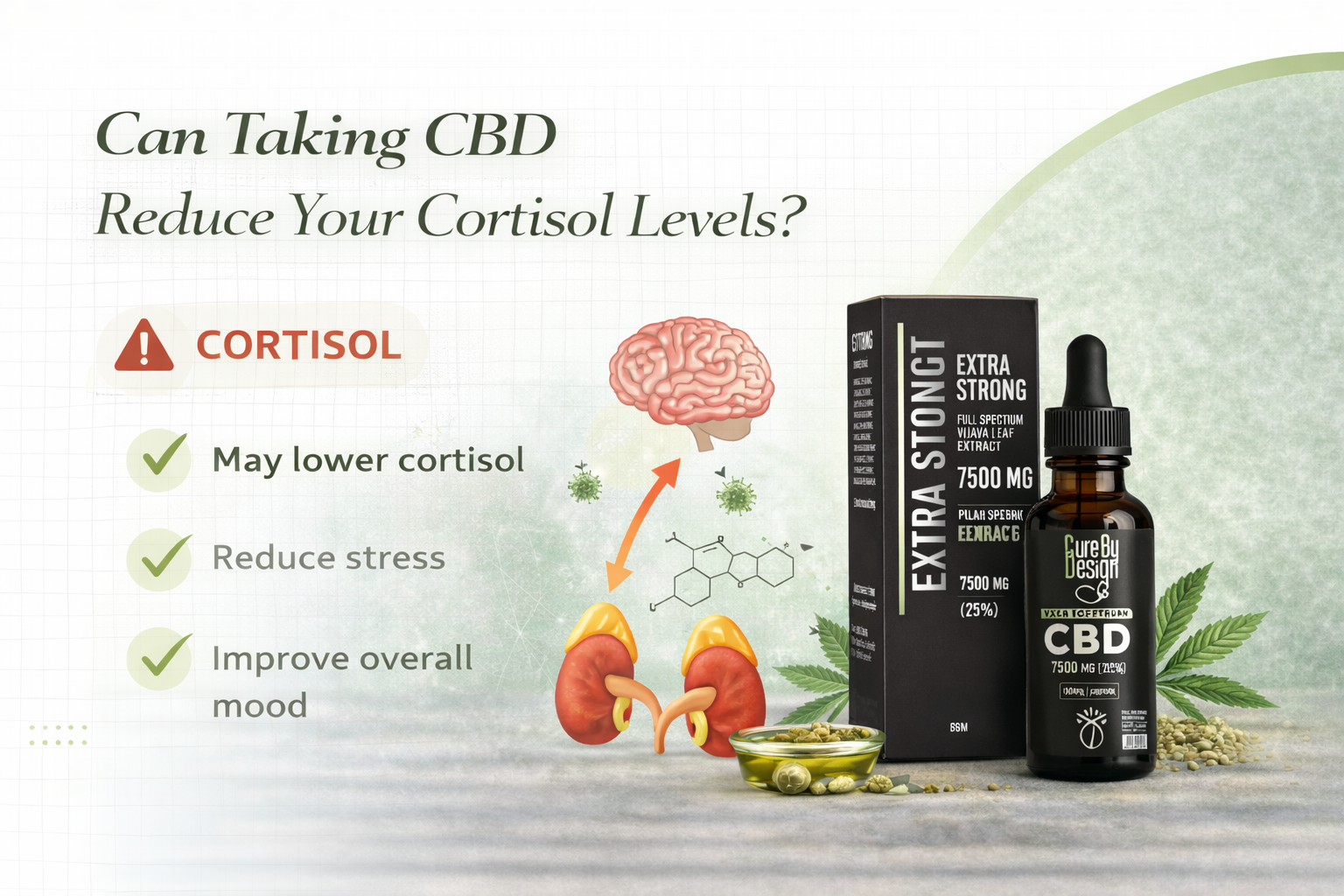
Cannabidiol, or CBD, is a non-psychoactive compound derived from the cannabis plant, gaining attention for its potential to lower cortisol levels. Cortisol is known as the stress hormone and its levels can rise during stressful situations. Research shows that CBD interacts with the body’s endocannabinoid system, possibly influencing serotonin receptors that regulate mood. Clinical studies indicate that CBD can reduce anxiety symptoms and salivary cortisol levels in participants. A dosage of around 300 mg appears effective in this regard. However, individual responses can differ and more research is needed to fully understand how CBD impacts cortisol management safely and effectively.
Table of Contents
- How CBD Interacts with the Endocannabinoid System
- Key Research Findings on CBD and Cortisol Levels
- The Relationship Between CBD, Stress, and Anxiety
- Recommended Dosage for CBD and Cortisol Management
- Potential Risks and Considerations When Using CBD
- Final Thoughts on CBD’s Impact on Cortisol
- Frequently Asked Questions
How CBD Interacts with the Endocannabinoid System
The endocannabinoid system (ECS) is a complex network that plays a vital role in regulating many bodily functions, including mood, stress, and even sleep. CBD, or cannabidiol, interacts with this system by influencing the CB1 and CB2 receptors, which are essential for managing our stress responses. Unlike THC, CBD does not bind directly to these receptors, but rather modulates their activity, helping to promote a state of balance, known as homeostasis.
Research indicates that CBD may enhance serotonin signaling, particularly through its interaction with the 5-HT1A receptor, which is crucial for mood regulation. This could be a key factor in how CBD helps mitigate anxiety and stress, important contributors to elevated cortisol levels. Furthermore, the ECS is not just about stress; it also regulates sleep, appetite, and immune response, highlighting its broad influence on overall well-being.
Studies have shown that CBD can alter the release of neurotransmitters tied to anxiety, suggesting it may help lower stress levels and, consequently, cortisol production. However, individual reactions to CBD can differ significantly based on genetics and health, indicating that more research is necessary to fully understand its effects on the ECS and its therapeutic potential.
Key Research Findings on CBD and Cortisol Levels

Multiple studies suggest that CBD can effectively lower cortisol levels, especially in response to stress. For instance, a single dose of CBD has been shown to significantly reduce cortisol levels during stressful situations. In one study, participants who received CBD reported both reduced anxiety and lower cortisol levels compared to those in a control group. It’s important to note that the effects of CBD on cortisol may vary based on dosage and individual differences, with some studies indicating that CBD might be more beneficial for individuals who have higher baseline anxiety or stress levels. Moreover, research highlights the potential of using CBD alongside traditional therapies for managing anxiety and stress. While current findings are promising, long-term studies are needed to confirm the lasting effects of CBD on cortisol levels. Additionally, the placebo effect may play a role in the perceived reductions in stress for those taking CBD. Consistent use of CBD could lead to sustained reductions in cortisol over time, but more research is necessary to determine the most effective dosages for cortisol management.
| Study | Findings | Reference |
|---|---|---|
| Hurd et al., 2019 | CBD treatment significantly reduced anxiety symptoms and salivary cortisol levels. | ScienceDirect |
| Spinella et al., 2024 | Individuals who believed they were taking CBD showed lower cortisol levels following stress exposure compared to those who did not. | PubMed |
| Linares et al., 2019 | A dosage of 300 mg of CBD significantly decreased cortisol levels and subjective anxiety in participants. | Rojas-Valverde & Fallas-Campos, 2023 |
The Relationship Between CBD, Stress, and Anxiety
CBD, or cannabidiol, has gained attention for its potential to help manage stress and anxiety. Research indicates that high cortisol levels often accompany increased anxiety and stress, creating a cycle that can be difficult to break. CBD has been studied for its ability to alleviate symptoms of anxiety disorders, and some findings suggest that it may help reduce anxiety levels, thereby potentially influencing cortisol production. Users of CBD report subjective improvements in mood and stress levels, which may contribute to lower cortisol levels during stressful situations.
Furthermore, CBD may help regulate the body’s stress response, leading to a calmer state. Understanding this relationship can provide valuable insights into treatment options for managing anxiety and stress. Timing also plays a role; when CBD is administered in relation to stress exposure may affect its effectiveness. Additionally, research shows that CBD may improve sleep quality, which can further aid in reducing anxiety and cortisol levels. However, individual experiences with CBD can vary widely based on personal factors and existing stress levels.
Recommended Dosage for CBD and Cortisol Management
Finding the right dosage of CBD for managing cortisol levels is essential for effectiveness. Research indicates that a dosage around 300 mg is often effective in reducing anxiety and cortisol levels, but individual responses can vary. Starting with a lower dose and gradually increasing it helps identify what works best for each person. Factors like weight, metabolism, and the severity of symptoms play a role in determining the ideal dosage. Some may find relief with lower doses, while others might need higher amounts to achieve the desired effects. It’s also important to consider the method of consumption, whether it’s oils, capsules, or edibles, as this can influence how CBD works in the body. Consistency in both the dosage and the method of administration is crucial for reliable results. Consulting a healthcare professional can provide personalized guidance, ensuring that the chosen dosage aligns with individual needs and health conditions. Monitoring how your body responds to CBD will help adjust dosages as necessary, maximizing the benefits for cortisol management.
- Studies suggest that a dosage of around 300 mg of CBD is often effective for reducing anxiety and cortisol levels.
- Lower doses may not yield the same benefits, while higher doses may lead to diminishing returns.
- It is important to start with a low dose and gradually increase to find the optimal level for each individual.
- The ideal dosage can vary based on individual factors such as weight, metabolism, and severity of symptoms.
- Consulting a healthcare professional can help guide dosage decisions for effective outcomes.
- Understanding the proper dosage is critical for maximizing the potential benefits of CBD for cortisol management.
- Some individuals may require higher doses to achieve the desired effects, while others may respond well to lower doses.
- Monitoring how the body responds to CBD can help in adjusting dosages as needed.
- Research indicates that the method of consumption (e.g., oil, capsules, edibles) may influence the effective dosage.
- Consistency in dosage and administration method is important for reliable results.
Potential Risks and Considerations When Using CBD
CBD is generally safe for many people, but it is not without its risks. Some individuals might experience side effects like fatigue or digestive issues, which can be bothersome. The quality of CBD products can vary widely depending on the manufacturer, so it is crucial to choose reputable brands that provide third-party lab testing to ensure purity and potency. Additionally, CBD can interact with other medications, potentially altering their effectiveness, making it essential to consult with a healthcare provider before starting any CBD regimen.
The long-term effects of using CBD remain unclear, and more research is needed to fully understand how it impacts health over time. While CBD products might claim to be THC-free, some may still contain trace amounts of THC, which could lead to psychoactive effects or even legal complications in certain jurisdictions. People with specific medical conditions should approach CBD usage carefully, ideally under professional guidance, to avoid any adverse reactions.
Moreover, individual responses to CBD can vary greatly. What works for one person may not work for another, which complicates its use for managing cortisol levels. It is advisable to start with a lower dose and adjust gradually, as taking too high of a dose can lead to unwanted side effects. Keeping a journal to track how CBD affects you can be a helpful tool in managing your experience and determining the right dosage for your needs.
Final Thoughts on CBD’s Impact on Cortisol
Emerging research hints at a connection between CBD and reduced cortisol levels during stress, offering hope for those looking for natural ways to manage anxiety. Many people are exploring CBD as an alternative to traditional medications, especially given its potential benefits without the psychoactive effects associated with THC. However, while initial findings are promising, the need for more rigorous studies cannot be overstated. Individual responses to CBD can differ significantly, underscoring the importance of personalized approaches when considering its use. As our understanding of CBD continues to evolve, so too do the possibilities for its application in various health contexts. Future research may reveal even more about how CBD interacts with cortisol and our stress response. Yet, skepticism remains about the long-term safety and effectiveness of CBD for treating stress and anxiety. Staying updated on new studies can help individuals make informed choices about incorporating CBD into their wellness routines. With the CBD market expanding rapidly, consumers must prioritize product quality and sourcing to ensure they receive safe and effective options.
Frequently Asked Questions
What is cortisol and why is it important?
Cortisol is a hormone made by your body, playing a key role in responses to stress, regulating metabolism, and controlling blood sugar levels.
How does stress affect cortisol levels?
When you’re stressed, your body produces more cortisol, which can be useful for short periods, but too much can lead to health issues.
Can CBD actually help lower cortisol levels?
Some studies suggest that CBD may help reduce stress and anxiety, which could lead to lower cortisol levels, but more research is needed.
Are there any side effects of using CBD for stress?
CBD is generally considered safe, but it can cause side effects like fatigue, changes in appetite, or stomach issues in some people.
Is it safe to combine CBD with other medications?
It’s best to talk to your doctor before combining CBD with other medications, as it could interact with certain drugs.
TL;DR This report explores the potential of CBD to reduce cortisol levels, primarily through its interaction with the endocannabinoid system and serotonin receptors. Research indicates that CBD can help manage stress and anxiety, which are closely linked to cortisol production. Although a dosage of around 300 mg appears effective, individual responses vary, and further studies are needed to confirm safety and efficacy. Overall, CBD shows promise for cortisol management, but caution is advised.