Hemp Massage Oil: What Is It and How Does It Work?

Introduction
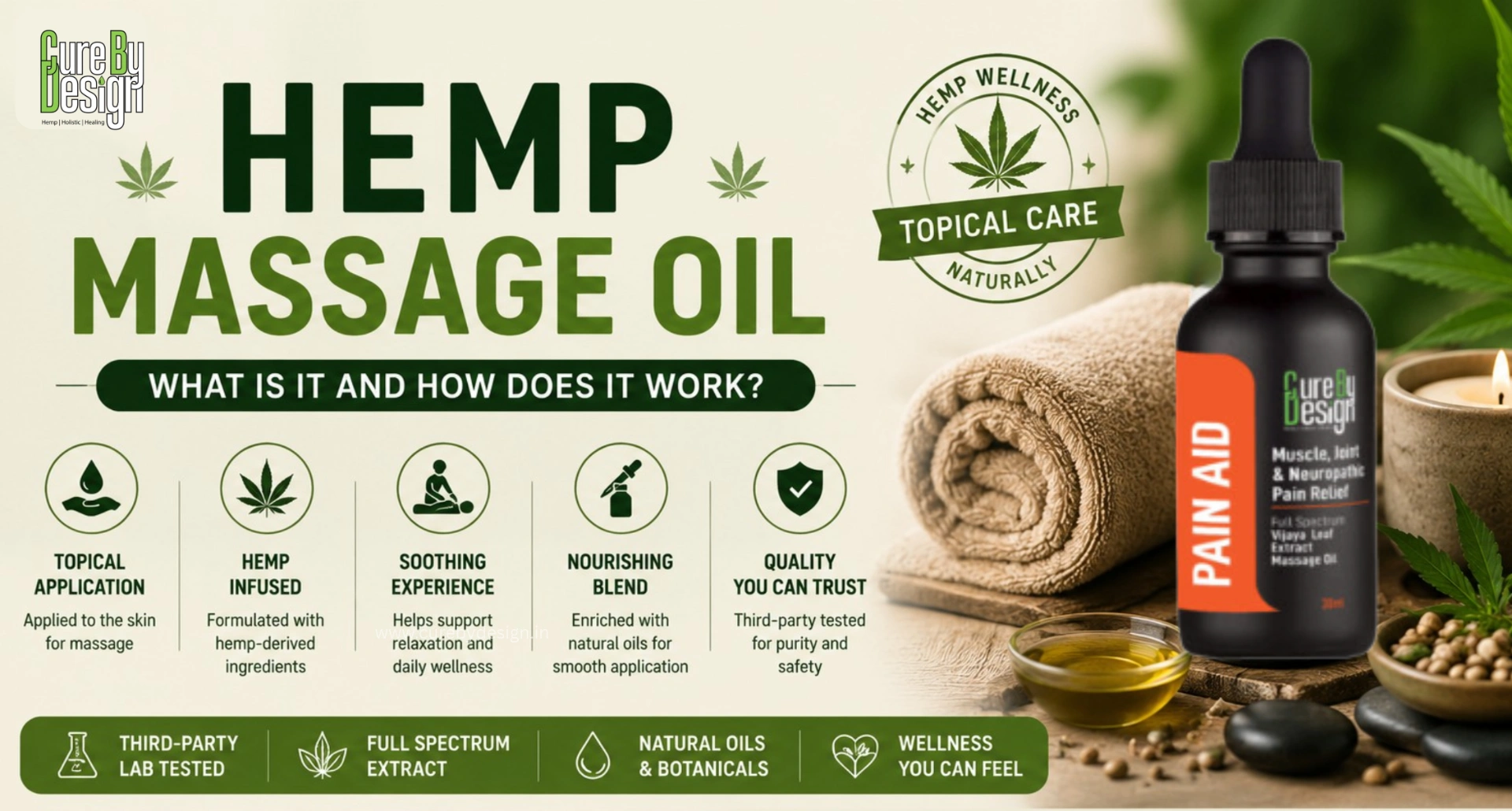
Hemp massage oil is a topical wellness product formulated for application to the skin, often as part of a massage routine. Depending on the formulation, it may contain hemp derived ingredients such as hemp seed oil, cannabinoids, botanical extracts, essential oils, or terpenes.
Interest in hemp oil for massage has grown as people look for plant based ingredients that can complement everyday self care and massage practices. However, it is important to understand what these products can realistically do and what the current science does not yet establish.
Unlike an oral hemp or cannabinoid product, a hemp topical oil is designed to be applied externally to the skin. The way topical cannabinoids interact with the skin can also differ from how cannabinoids behave after oral consumption. Research suggests that the skin contains an endocannabinoid system and cannabinoid related receptors, but evidence for specific therapeutic effects from commercially available topical products remains limited and formulation dependent.
This guide explains what hemp massage oil is, how it works, what ingredients to look for, how to use it, and what the research says about topical cannabinoids.
What Is Hemp Massage Oil?
Hemp massage oil is an oil based topical formulation intended for external use during massage or everyday skin care.
The term “hemp oil” can refer to several different ingredients, so reading the product label is important.
A hemp massage formulation may contain:
- Hemp seed oil
- Hemp extract
- Cannabinoids such as CBD or CBG
- Terpenes
- Botanical oils
- Essential oils
- Carrier oils
- Skin conditioning ingredients
These ingredients can have very different properties.
For example, hemp seed oil is primarily a nutritional and cosmetic oil obtained from hemp seeds. It does not naturally contain significant amounts of cannabinoids such as CBD or CBG.
A cannabinoid massage oil, on the other hand, may contain a hemp extract that provides specific cannabinoids.
Therefore, hemp seed oil and cannabinoid infused hemp oil are not necessarily the same product.
How Does Hemp Massage Oil Work?
The first thing to understand is that massage itself and the ingredients in a massage oil are two separate parts of the experience.
Massage involves physical manipulation of the skin and underlying soft tissues. The oil primarily helps reduce friction, allowing the hands to move smoothly across the skin.
A cannabinoid containing hemp topical oil adds another layer because cannabinoids can interact with biological pathways in the skin.
Research has identified components of the endocannabinoid system in skin cells, including cannabinoid receptors and other cannabinoid responsive pathways. The skin’s endocannabinoid system is involved in maintaining skin homeostasis and barrier related functions.
However, this does not mean that applying a cannabinoid massage oil automatically produces a specific medical effect.
The actual experience can vary depending on:
- Cannabinoid concentration
- Formulation
- Carrier oil
- Other botanical ingredients
- Skin condition
- Amount applied
- Individual sensitivity
- Duration of application
Research on topical cannabinoids is still developing, and studies have highlighted significant differences between formulations and absorption characteristics.
What Is the Difference Between Hemp Seed Oil and Hemp Extract?
This distinction is particularly important when choosing hemp oil for massage.
| Ingredient | Main source | Cannabinoids | Common use |
|---|---|---|---|
| Hemp seed oil | Hemp seeds | Naturally very low | Skin conditioning and massage |
| Hemp extract | Hemp plant material | May contain cannabinoids | Cannabinoid based formulations |
| CBD isolate | Purified CBD | CBD | Targeted cannabinoid formulation |
| Full spectrum hemp extract | Hemp plant material | Multiple cannabinoids | Whole plant cannabinoid formulation |
Hemp seed oil can be useful as a carrier or conditioning ingredient, but it should not automatically be considered a source of CBD or CBG.
If you are specifically looking for a cannabinoid massage oil, check the ingredient list and cannabinoid information rather than relying only on the word “hemp.”
What Are Cannabinoids in Hemp Massage Oil?
Cannabinoids are naturally occurring compounds associated with the Cannabis plant.
Some commonly discussed cannabinoids include:
- CBD, or cannabidiol
- CBG, or cannabigerol
- CBC, or cannabichromene
- THC, or tetrahydrocannabinol
Not every hemp topical contains all of these compounds.
The cannabinoid profile depends on the source material and extraction process.
CBD
CBD is one of the most widely studied cannabinoids and is commonly found in topical formulations.
Research into topical CBD has investigated its interaction with skin biology and the skin endocannabinoid system, but clinical evidence is still developing. Reviews emphasize the need for more standardized formulations and larger controlled studies.
CBG
CBG, or cannabigerol, is another cannabinoid found in hemp and cannabis plants.
It is being investigated for its interaction with cannabinoid related pathways and other biological targets. However, claims about specific outcomes from CBG massage oils should not be treated as established medical facts.
THC
Some full spectrum hemp extracts may contain trace amounts of THC depending on the source and formulation.
Because regulations differ between countries and products, consumers should check the product’s cannabinoid profile, testing information and applicable local requirements.
What Is a Full Spectrum Massage Oil?
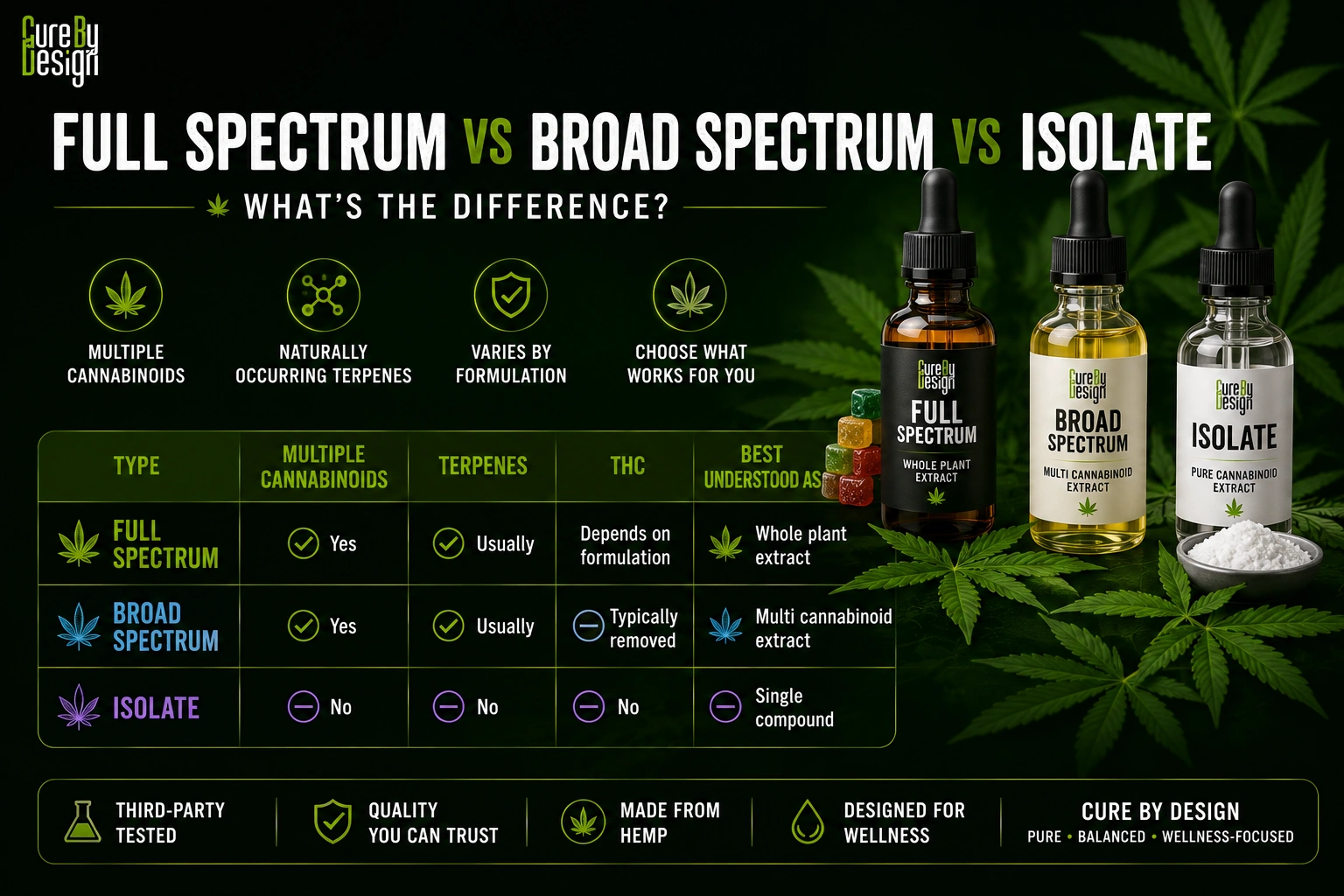
A full spectrum massage oil generally refers to a topical formulation containing a broader range of naturally occurring hemp compounds rather than a single isolated cannabinoid.
Depending on the formulation, this can include:
- Multiple cannabinoids
- Terpenes
- Other naturally occurring plant compounds
- A carrier oil
The exact composition varies by product.
The term “full spectrum” should therefore be supported by transparent ingredient and laboratory information.
A reputable product should make it possible for consumers to understand what cannabinoids are present and, where applicable, how much of each cannabinoid the formulation contains.
What Are the Potential Benefits of Hemp Massage Oil?
The benefits should be separated into massage related benefits, skin care properties and cannabinoid research.
1. Helps create a smoother massage experience
One of the simplest purposes of massage oil is lubrication.
An oil can help reduce friction between the hands and skin, making massage movements smoother and more comfortable.
2. Supports a moisturizing skin care routine
Many plant oils contain fatty acids and other compounds that can help condition the skin.
Hemp seed oil, for example, is commonly used in cosmetic formulations because of its lipid composition.
3. Provides a plant based topical experience
For people who prefer botanical ingredients, a hemp topical oil can be part of an everyday self care routine.
4. Cannabinoid skin research is developing
Scientific research has identified cannabinoid responsive pathways in the skin and continues to investigate how cannabinoids interact with skin cells and related biological systems.
However, research findings should not be converted into guaranteed claims about treating pain, inflammation, arthritis, injuries or other medical conditions.
A 2025 systematic review and meta analysis found some evidence of cannabinoid related effects on itching, but did not find significant benefits across several other dermatological outcomes. The researchers also emphasized the need for larger and better standardized studies.
Hemp Massage Oil vs Cannabinoid Massage Oil
These terms can sometimes be used interchangeably in marketing, but they are not necessarily identical.
Hemp massage oil describes a massage oil containing one or more hemp derived ingredients.
Cannabinoid massage oil more specifically suggests that the formulation contains cannabinoids such as CBD, CBG or other cannabinoid compounds.
For example:
Product A: Hemp seed oil + botanical oils
Product B: Hemp extract + CBD + carrier oil
Both could potentially be marketed as hemp massage products, but their ingredient profiles are very different.
Always check the actual formulation.
How to Choose a Quality Hemp Massage Oil
If you are buying hemp oil for massage, consider the following factors.
1. Check the complete ingredient list
Look beyond the front label.
Check whether the product contains:
- Hemp seed oil
- Hemp extract
- CBD
- CBG
- Terpenes
- Essential oils
- Other botanical extracts
- Fragrance ingredients
This helps you understand exactly what you are applying to your skin.
2. Check cannabinoid information
If the product contains cannabinoids, look for clear information about the cannabinoid profile.
Avoid products that make broad claims without explaining their ingredients or concentration.
3. Look for laboratory testing
Independent laboratory testing can provide useful information about product composition and quality.
Depending on the product, a certificate of analysis may provide information about:
- Cannabinoid content
- THC content
- Contaminants
- Heavy metals
- Microbial contamination
- Pesticide residues
Testing practices vary, so consumers should understand what the certificate actually covers.
4. Check the carrier oil
The carrier oil affects the texture, absorption characteristics and overall massage experience.
Common carrier oils include:
- Coconut oil
- MCT oil
- Jojoba oil
- Hemp seed oil
- Almond oil
- Grapeseed oil
People with known allergies should check the ingredient list carefully.
5. Consider fragrance and essential oils
Essential oils can change the aroma and sensory experience of a massage product.
However, some people may be sensitive to fragrances or essential oils.
If you have sensitive skin, a simpler formulation may be preferable.
How to Use Hemp Massage Oil
Using a hemp massage oil is generally straightforward.
Step 1: Check the product instructions
Always follow the manufacturer’s instructions first.
Step 2: Apply a small amount
Place a small amount of oil into your hands.
Step 3: Warm the oil between your palms
Gently rub your hands together before applying the oil.
Step 4: Massage onto intact skin
Use the oil as part of your normal massage routine.
Avoid applying it to broken, damaged or irritated skin unless a qualified healthcare professional has advised you otherwise.
Step 5: Wash your hands afterward
Wash your hands after application, particularly before touching your eyes, mouth or food.
Can Hemp Massage Oil Be Used Every Day?
Whether a hemp topical oil is suitable for daily use depends on its formulation and the manufacturer’s directions.
There is no universal daily application schedule for every hemp massage oil.
Pay attention to how your skin responds.
If you experience:
- Redness
- Burning
- Itching
- Swelling
- Rash
- Significant irritation
stop using the product and seek appropriate medical advice if the reaction is severe or persistent.
Does Hemp Massage Oil Enter the Bloodstream?
This is an important distinction between topical and transdermal products.
A topical product is primarily intended for application to the skin and local interaction with skin tissues.
A transdermal product is specifically designed to deliver an active ingredient across the skin and into systemic circulation.
These are not necessarily the same thing.
Research has found that cannabinoid absorption through the skin can vary considerably depending on the formulation and delivery system.
Therefore, you should not assume that applying a standard hemp massage oil to your skin produces the same effects as consuming a cannabinoid product.
Is Hemp Massage Oil a Medical Treatment?
No. Hemp massage oil should not automatically be considered a medical treatment.
Topical cannabinoid research is promising in some areas, but evidence is still developing and results vary between formulations and conditions.
Scientific reviews have repeatedly emphasized limitations such as small studies, inconsistent formulations, limited clinical data and differences in skin absorption.
A hemp massage oil can be positioned as part of a personal massage and wellness routine without claiming that it treats or cures a medical condition.
If you have persistent pain, inflammation, a skin disorder or another medical concern, consult an appropriately qualified healthcare professional.
Hemp Massage Oil and the Endocannabinoid System
The endocannabinoid system, or ECS, is a biological signaling system found throughout the body.
The skin contains components of this system, including cannabinoid receptors and other cannabinoid responsive pathways.
Researchers believe the skin ECS contributes to processes associated with skin homeostasis and barrier function.
This is one reason researchers are interested in studying topical cannabinoids.
However, the existence of cannabinoid receptors in the skin does not prove that every cannabinoid topical product produces a specific health outcome.
The formulation, cannabinoid concentration, delivery system and individual biology all matter.
Hemp Massage Oil: What Does the Science Say?
Research into topical cannabinoids has increased significantly, but there are still important gaps.
A systematic review examining transdermal and topical CBD trials found only a small number of qualifying human studies from a much larger pool of publications.
Another review noted that safety and efficacy data for topical cannabinoid products remain limited and that products can differ considerably in formulation and absorption.
More recent research continues to explore cannabinoid applications in dermatology, while emphasizing the need for standardized formulations and stronger clinical evidence.
The takeaway: cannabinoid research is developing, but consumers should distinguish scientific investigation from proven medical treatment.
Hemp Massage Oil Safety Tips
Before using a hemp topical oil:
- Read the complete ingredient list.
- Check the cannabinoid content if cannabinoids are included.
- Look for appropriate laboratory testing.
- Perform a small patch test if you are concerned about skin sensitivity.
- Avoid contact with the eyes.
- Do not apply to broken skin unless advised by a healthcare professional.
- Check for allergens.
- Follow the manufacturer’s directions.
- Keep the product away from children and pets.
- Store it according to the label instructions.
If you are pregnant, breastfeeding, taking medication or managing a medical condition, discuss cannabinoid containing products with a qualified healthcare professional before use.
Frequently Asked Questions About Hemp Massage Oil
What is hemp massage oil?
Hemp massage oil is a topical oil used during massage that may contain hemp seed oil, hemp extract, cannabinoids, botanical ingredients or a combination of these ingredients. The exact composition depends on the product.
What is hemp oil for massage used for?
Hemp oil for massage is primarily used to provide lubrication during massage and support a comfortable skin care routine. Products containing cannabinoids may also be used as part of a cannabinoid focused topical wellness routine.
Is hemp massage oil the same as CBD oil?
No. Hemp massage oil and CBD oil are not necessarily the same.
Hemp massage oil is a topical formulation designed for skin application, while CBD oil may refer to different formulations, including products intended for oral or topical use.
Always check the product label and intended route of use.
What is cannabinoid massage oil?
A cannabinoid massage oil is a topical massage formulation containing one or more cannabinoids such as CBD or CBG.
The concentration and cannabinoid profile depend on the product.
What is full spectrum massage oil?
Full spectrum massage oil generally refers to a topical formulation containing a range of naturally occurring hemp compounds rather than a single isolated cannabinoid.
The exact cannabinoid and terpene profile depends on the formulation.
Can hemp massage oil make you feel high?
A topical hemp massage oil should not automatically be expected to produce the intoxicating effects associated with consuming THC.
However, product composition matters. Check the label and laboratory information, particularly if the formulation contains THC.
How often can I use hemp massage oil?
Follow the manufacturer’s recommended directions. There is no universal frequency that applies to every hemp topical oil because formulations differ.
Can I use hemp massage oil on my face?
Not necessarily.
Massage oils can contain fragrances, essential oils and other ingredients that may not be appropriate for facial skin. Check the product directions before applying it to your face.
Can I use hemp massage oil on sensitive skin?
If you have sensitive skin, check the ingredient list carefully and consider a patch test before wider application.
Stop use if irritation develops.
Does hemp massage oil treat pain?
It should not be marketed or assumed to be a proven treatment for pain.
Topical cannabinoid research is ongoing, but evidence varies by formulation and condition. More high quality clinical research is needed.
What should I look for when buying hemp massage oil?
Look for transparent ingredients, clear cannabinoid information where applicable, appropriate laboratory testing, manufacturer instructions and a formulation suited to your intended use.
Final Thoughts
Hemp massage oil combines the practical benefits of massage lubrication with the growing interest in hemp derived botanical ingredients and topical cannabinoids.
The most important thing is understanding exactly what you are buying.
Hemp seed oil, hemp extract, CBD, CBG and full spectrum formulations are not interchangeable terms. Their composition and intended uses can differ significantly.
Current research suggests that the skin has an active endocannabinoid system and that topical cannabinoids are an important area of scientific investigation. However, evidence for specific therapeutic outcomes remains limited and formulation dependent.
For consumers, the best approach is simple: check the ingredients, understand the cannabinoid profile, look for appropriate testing, follow the usage instructions and avoid unsupported medical claims.
For wellness and massage, a well formulated hemp topical oil can be a useful addition to an everyday self care routine while the science around topical cannabinoids continues to develop.