
CBG (Cannabigerol): The Mother Cannabinoid Explained | Benefits, Science, Uses & Future Research

What is CBG (Cannabigerol)?
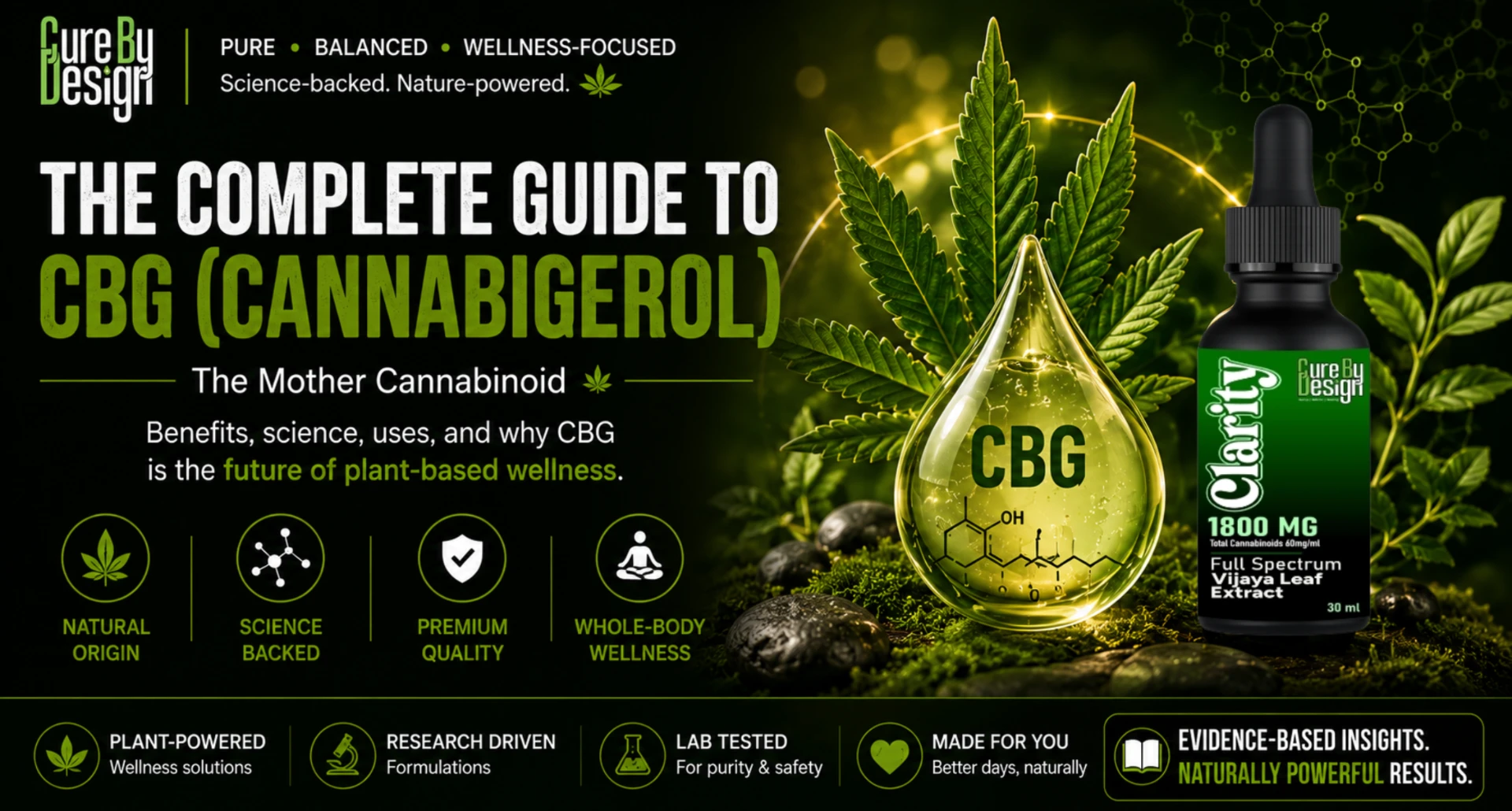
As cannabinoid science continues to advance, one compound has rapidly gained attention among researchers, wellness enthusiasts, and hemp experts: CBG (Cannabigerol).
Often called the “Mother Cannabinoid,” CBG plays a foundational role in the development of many other cannabinoids found in hemp and cannabis plants.
While CBD and THC are more widely recognized, CBG is unique because it serves as the precursor from which several major cannabinoids originate. Without CBG, cannabinoids such as CBD, THC, and CBC would not exist in their current forms.
Today, growing scientific interest is positioning CBG as one of the most exciting cannabinoids in modern plant-based wellness.
Why is CBG Called the Mother Cannabinoid?
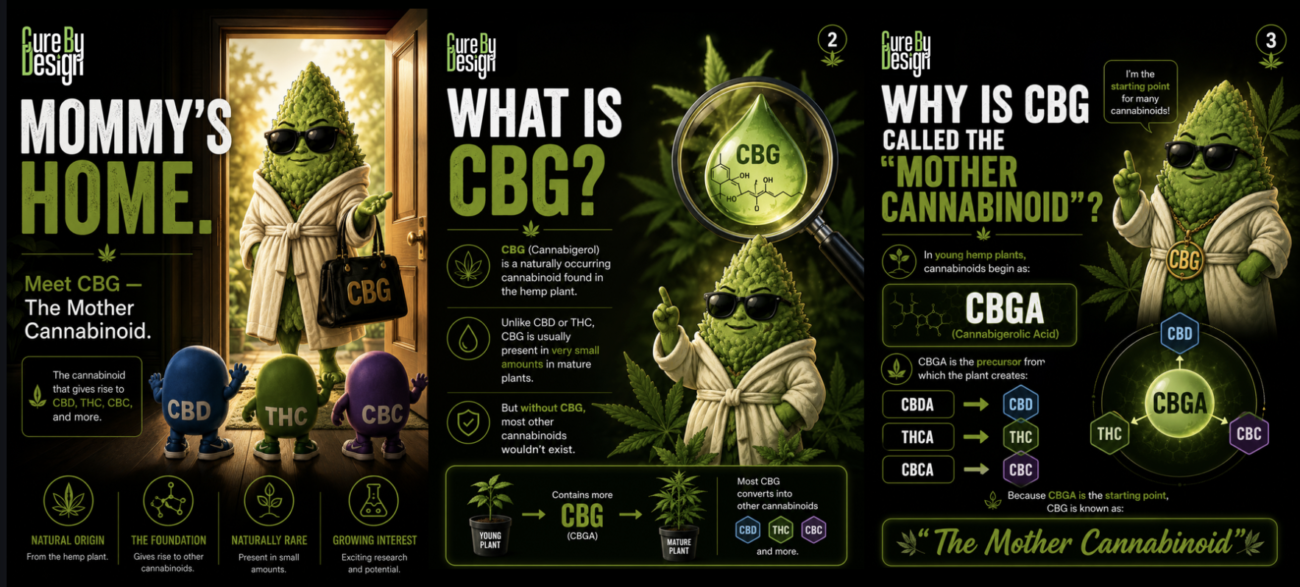
The term Mother Cannabinoid comes from CBG’s relationship with CBGA (Cannabigerolic Acid).
In young hemp plants, CBGA is produced naturally and acts as the starting molecule for cannabinoid development.
As the plant matures, specialized enzymes convert CBGA into:
CBDA
The acidic precursor of CBD.
THCA
The acidic precursor of THC.
CBCA
The acidic precursor of CBC.
When heat is applied through natural processes or decarboxylation, these compounds become:
- CBD (Cannabidiol)
- THC (Tetrahydrocannabinol)
- CBC (Cannabichromene)
This is why scientists often describe CBGA and CBG as the foundation of the cannabinoid family tree.
Simply put:
No CBGA = No CBD, THC, or CBC.
Understanding the Cannabinoid Family Tree
The cannabinoid production pathway begins with a single molecule:
CBGA (Cannabigerolic Acid)
CBGA then transforms into:
- CBDA → CBD
- THCA → THC
- CBCA → CBC
Because nearly every major cannabinoid originates from CBGA, it serves as the biological starting point of cannabinoid biosynthesis.
This unique role has earned CBG its reputation as the “stem cell” or “mother” cannabinoid of the hemp plant.
Why is CBG Rare?
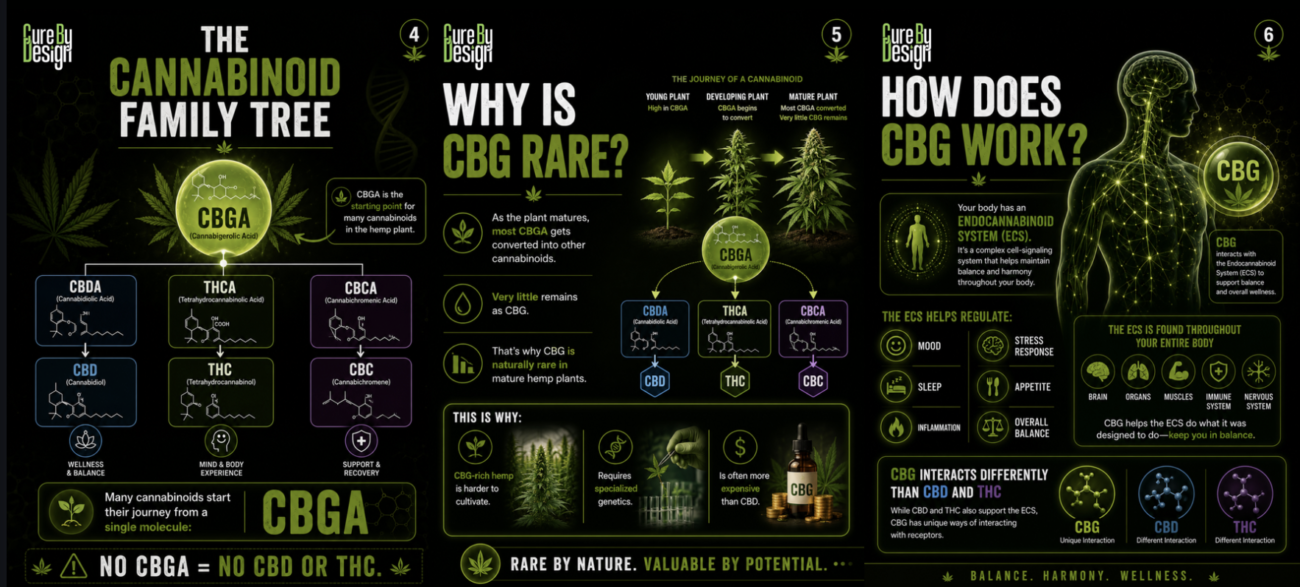
One of the reasons CBG has become so interesting is its rarity.
In young hemp plants, CBGA levels are relatively high.
However, as the plant develops:
- CBGA begins converting into other cannabinoids.
- CBD concentrations increase.
- THC concentrations develop.
- CBC and other cannabinoids emerge.
By the time the plant reaches maturity, only a small amount of CBG typically remains.
As a result:
- CBG-rich hemp varieties are harder to cultivate.
- Specialized genetics are required.
- Extraction is more expensive.
- Finished products often cost more than comparable CBD products.
This rarity contributes significantly to the growing value and interest surrounding CBG.
How Does CBG Work?
To understand CBG, it’s important to understand the Endocannabinoid System (ECS).
The ECS is a complex biological network that helps maintain balance throughout the body.
Researchers believe the ECS influences:
- Mood
- Sleep
- Stress response
- Immune activity
- Appetite
- Recovery processes
- Overall wellness
The system contains two primary receptor types:
CB1 Receptors
Found primarily in the brain and nervous system.
CB2 Receptors
Located throughout immune and peripheral tissues.
Unlike CBD, which tends to interact indirectly with these receptors, research suggests CBG may interact with certain receptor pathways differently, making it a unique area of cannabinoid research.

Potential Benefits of CBG
Although research remains ongoing, scientists are actively investigating CBG’s potential role in several areas.
1. Everyday Wellness Support
Many consumers incorporate CBG into holistic wellness routines designed to support overall balance and well-being.
2. Focus and Mental Clarity
Anecdotal reports suggest some individuals use CBG as part of productivity-focused wellness routines due to its non-intoxicating nature.
Unlike THC, CBG does not produce a psychoactive “high.”
3. Endocannabinoid System Support
Researchers continue exploring how CBG interacts with ECS receptors and signaling pathways that contribute to homeostasis.
4. Neuroprotective Research
Preliminary studies have sparked interest in CBG’s potential interaction with neurological pathways.
While additional clinical research is required, this remains one of the most promising areas of cannabinoid science.
5. Full Spectrum Synergy
CBG is frequently included in full-spectrum formulations because researchers believe cannabinoids may work together through the Entourage Effect.
This theory suggests cannabinoids and terpenes may produce broader effects collectively than individually.
CBG vs CBD: What’s the Difference?
Although both cannabinoids are non-intoxicating, they differ in several ways.
| Feature | CBG | CBD |
|---|---|---|
| Full Name | Cannabigerol | Cannabidiol |
| Plant Concentration | Low | High |
| Known As | Mother Cannabinoid | Most Popular Cannabinoid |
| Research Status | Emerging | Extensive |
| Psychoactive | No | No |
| ECS Interaction | More direct pathways under study | More indirect pathways under study |
Both cannabinoids are valuable and may complement one another in full-spectrum products.
What is CBG Being Studied For?
Researchers are currently investigating CBG in relation to:
Brain Health
Preliminary research suggests potential interactions with neurological pathways.
Microbial Balance
Studies have explored CBG’s interactions with various microorganisms.
Inflammatory Pathways
Researchers continue studying how cannabinoids interact with inflammatory signaling mechanisms.
Endocannabinoid System Function
Understanding how CBG influences ECS regulation remains a major focus of current research.
Overall Wellness Support
Scientists continue evaluating how cannabinoids may contribute to broader wellness applications.
Important: Research remains ongoing, and additional human clinical studies are needed.
Who May Be Interested in CBG?
CBG is often explored by individuals interested in:
Daily Wellness Routines
People seeking plant-based wellness support.
Focused Lifestyles
Professionals, students, and individuals looking for non-intoxicating cannabinoid options.
Endocannabinoid System Awareness
Consumers interested in supporting overall physiological balance.
Full Spectrum Experiences
Those seeking products that contain multiple cannabinoids and naturally occurring hemp compounds.
As with all wellness products, individual experiences may vary.
The Future of CBG Research
CBG represents one of the fastest-growing areas of cannabinoid science.
Researchers continue exploring:
- Neurological applications
- Cannabinoid receptor interactions
- Gut and microbiome pathways
- Endocannabinoid system regulation
- Full-spectrum cannabinoid synergy
As scientific understanding expands, CBG is expected to become increasingly important within both research and wellness discussions.
Why CBG Matters
While CBD remains the most recognized cannabinoid worldwide, CBG occupies a unique position because it serves as the biological foundation for many other cannabinoids.
Its rarity, scientific significance, and expanding research profile have made it one of the most exciting compounds in modern hemp science.
Whether you’re exploring cannabinoids for the first time or looking to deepen your understanding of the hemp plant, learning about CBG provides valuable insight into how cannabinoids are created and how they interact with the body’s natural systems.
Frequently Asked Questions (FAQ)
What is CBG?
CBG (Cannabigerol) is a naturally occurring cannabinoid found in hemp and cannabis plants. It is often called the Mother Cannabinoid because many cannabinoids originate from its precursor, CBGA.
Why is CBG called the Mother Cannabinoid?
CBGA serves as the starting molecule from which CBD, THC, and CBC are produced. Because these cannabinoids begin with CBGA, CBG is known as the Mother Cannabinoid.
Is CBG the same as CBD?
No. While both are non-intoxicating cannabinoids, they are different compounds with distinct characteristics, receptor interactions, and research profiles.
Does CBG cause a high?
No. CBG is generally considered non-psychoactive and does not produce the intoxicating effects associated with THC.
Why is CBG more expensive than CBD?
CBG occurs naturally in much smaller concentrations within mature hemp plants, making cultivation and extraction more challenging and costly.
What is CBGA?
CBGA (Cannabigerolic Acid) is the acidic precursor that eventually becomes CBD, THC, CBC, and other cannabinoids.
How does CBG interact with the body?
Researchers believe CBG interacts with the Endocannabinoid System (ECS), a biological network involved in maintaining balance throughout the body.
What is the Endocannabinoid System?
The ECS is a complex cell-signaling system involved in regulating mood, sleep, stress responses, immune activity, appetite, and overall homeostasis.
Can CBG and CBD be used together?
Many full-spectrum hemp products contain both cannabinoids because researchers are studying potential synergistic interactions between multiple cannabinoids and terpenes.
Is research on CBG still ongoing?
Yes. CBG remains one of the most actively researched minor cannabinoids, and new studies continue to explore its potential biological interactions and wellness applications.
What does CBG stand for?
CBG stands for Cannabigerol, a naturally occurring cannabinoid found in hemp and cannabis plants.
What makes CBG different from CBD?
CBG is the precursor cannabinoid responsible for producing CBD and other cannabinoids, while CBD is a finished cannabinoid produced later in the plant’s lifecycle.
Is CBG naturally found in hemp?
Yes. CBG occurs naturally in hemp plants, though usually in very small amounts.
Why is CBG considered important?
CBG plays a crucial role in cannabinoid biosynthesis because many cannabinoids originate from CBGA, its acidic precursor.
Is CBG legal?
Legality depends on local regulations, cannabinoid content, and applicable laws within a specific region.